








What's Happening?
Wissam Faraj, a 35-year-old former Ford worker from Canton Township, along with three members of the Kahil family—Badr Kahil, 63, and his sons Firas, 36, and Aiman, 25, all from Dearborn—have been arraigned on multiple felony charges. Authorities allege
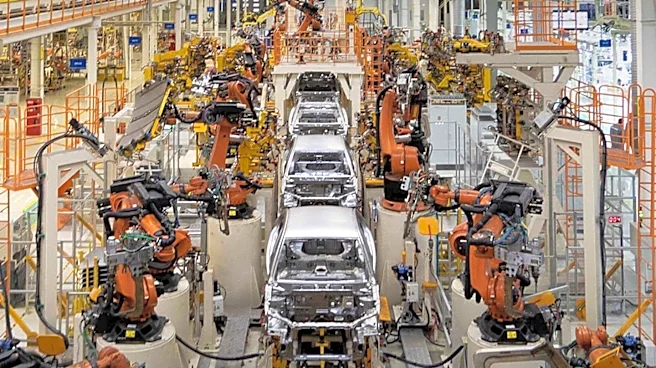
that Faraj stole over $80,000 worth of new car and truck parts, including airbags, bumpers, and headlights, from Ford's Rouge Plant in Dearborn, Michigan, on five separate occasions in March and April 2025. These parts were then allegedly resold through Startec Auto businesses in Detroit, primarily via eBay and Facebook Marketplace. The charges include conducting a criminal enterprise, which carries a potential sentence of up to 20 years in prison, and multiple counts of receiving and concealing stolen property. The scheme was uncovered after other Ford employees noticed missing inventory, prompting Ford's Global Security team to investigate and report the suspected thefts to Dearborn police.
Why It's Important?
This case highlights significant vulnerabilities in supply chain security and internal controls within large manufacturing operations in the U.S. The alleged theft of over $80,000 worth of auto parts from a major U.S. automaker like Ford underscores the potential for substantial financial losses due to employee misconduct. Such incidents can lead to increased operational costs, impact inventory management, and potentially affect the availability and pricing of genuine parts for consumers. For the automotive industry, this event serves as a stark reminder of the need for robust security measures and vigilant oversight to prevent internal theft. The resale of stolen parts, especially critical safety components like airbags, also poses a risk to public safety, as these parts may not meet quality standards or could be improperly installed, potentially compromising vehicle integrity and passenger safety.
What's Next?
The defendants, Wissam Faraj and the three members of the Kahil family, are currently facing legal proceedings in Dearborn's 19th District Court. They are presumed innocent until proven guilty. The Wayne County Prosecutor's Office will continue to build its case, presenting evidence related to the alleged thefts and the resale operation. Ford Motor Company, having initiated the investigation, will likely review and potentially enhance its internal security protocols at its manufacturing facilities to prevent similar incidents in the future. The outcome of this case could lead to stricter regulations or industry best practices for inventory management and employee oversight in large-scale manufacturing. Additionally, consumers who may have unknowingly purchased stolen parts could face issues with vehicle warranties or safety, prompting a need for greater awareness regarding the source of auto parts.
Beyond the Headlines
Beyond the immediate legal ramifications, this incident sheds light on the broader issue of illicit markets for automotive parts and the challenges faced by manufacturers in controlling their supply chains. The use of online platforms like eBay and Facebook Marketplace for reselling stolen goods highlights the evolving landscape of criminal activity, where digital channels facilitate the distribution of illicit merchandise. This case also raises questions about the due diligence performed by online marketplaces in vetting sellers and the origin of products. From an ethical standpoint, the alleged actions of the former Ford worker and the Kahil family represent a breach of trust and a disregard for corporate assets. The incident could prompt a re-evaluation of employee screening processes and the implementation of advanced tracking systems for high-value components within manufacturing plants to deter future thefts and protect both company assets and consumer safety.