






What's Happening?
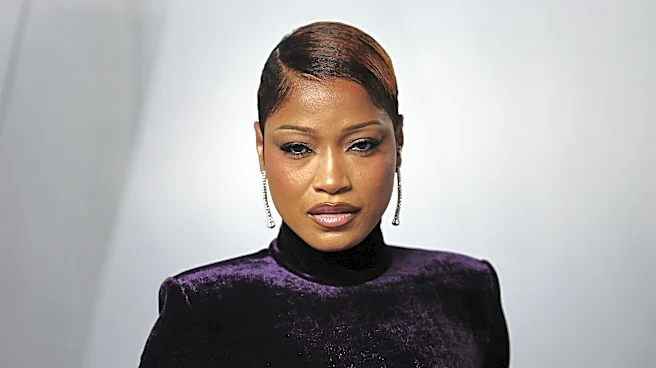
Actress Keke Palmer recently confessed to catfishing at the age of 12, using a fake online profile to impersonate another girl. During a playful interview where she was asked to share a chaotic act she was secretly proud of, Palmer revealed that she borrowed
photos of a girl she found online, whose name she recalled as Candace Cotton or Cottonball. Palmer described the girl as 'absolutely gorgeous' and decided to adopt this identity. What began as an attempt to make friends evolved into a more complex situation when a boy she had a crush on became involved. Palmer explained that she believed her crush would never talk to her directly, so she used the fake profile to communicate with him. The two 'fell in love through her,' meaning the boy developed feelings for the fake persona Palmer created. Palmer noted that this occurred before the term 'catfish' became widely known through the television show.
Why It's Important?
This revelation from Keke Palmer offers a personal glimpse into the early days of online identity and relationships, predating the widespread awareness of catfishing as a phenomenon. It highlights the complex motivations, such as seeking friendship or romantic connection, that can drive individuals, particularly young people, to create alternate online personas. The story underscores the enduring human desire for connection and acceptance, even if pursued through deceptive means online. For public figures like Palmer, sharing such personal anecdotes can humanize them and resonate with audiences who may have experienced similar online identity explorations or deceptions, either as perpetrators or victims. It also serves as a reminder of how digital interactions have evolved and the ethical considerations that have emerged alongside them.
What's Next?
While Palmer's confession is a personal anecdote from her past, it could spark broader conversations about online safety, digital ethics, and the psychological impacts of identity deception, especially among younger internet users. The story might encourage discussions in online communities or media outlets about the evolution of online relationships and the challenges of authenticity in digital spaces. For Palmer, this candid admission could further endear her to fans who appreciate her honesty and willingness to share vulnerable aspects of her past. It may also lead to her being asked about this experience in future interviews, potentially offering more insights into her motivations and the lessons learned from her childhood actions.
Beyond the Headlines
Palmer's story delves into the psychological aspects of identity formation and social interaction in the digital age. Her statement, 'I was just trying to have friends,' and later, 'We all wear masks when we need to,' suggests a deeper exploration of self-expression and belonging. It raises questions about the pressures young individuals face to conform or present an idealized version of themselves online, especially when feeling insecure or overlooked. The incident also touches upon the blurred lines between role-playing, fantasy, and deception in online interactions. It highlights how, even in its nascent stages, the internet provided a platform for individuals to experiment with identity, sometimes with unintended emotional consequences for all parties involved. This early experience could have shaped Palmer's understanding of authenticity and perception in her public life.