



What's Happening?
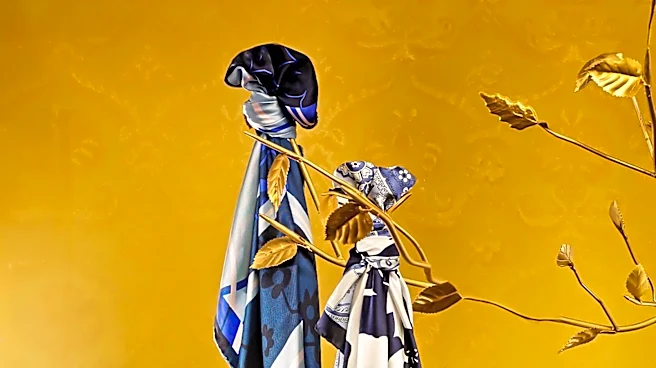
The silk scarf is experiencing a significant revival in the fashion industry, with designers like Celine, Givenchy, Dries Van Noten, Area, Hermès, and Chanel incorporating it into their collections in unconventional ways. This resurgence is attributed
to a broader consumer desire for self-expression and personalization in fashion, moving away from prescribed looks. Celebrities are also contributing to this trend by showcasing the versatility of silk scarves in everyday wardrobes, demonstrating how a traditional accessory can be styled in modern and unexpected ways. The accessory is appearing around necks, tucked into blazers, cascading from shoulders, and even integrated into entire garments, highlighting its adaptability. This shift indicates that consumers are seeking products that allow them to experiment with mood, identity, and occasion, rather than simply wearing items as they were originally designed.
Why It's Important?
This trend signifies a fundamental shift in consumer behavior within the fashion industry, emphasizing personalization and creativity over strict adherence to trends. For U.S. businesses in fashion and retail, this means an increased demand for versatile products that consumers can adapt and style in multiple ways. Brands that offer items allowing for individual interpretation, rather than dictating a single look, are likely to gain a competitive edge. This approach can foster deeper consumer engagement, as individuals become active participants in defining their style. The focus on self-expression also suggests that marketing strategies should highlight the potential for customization and diverse styling options, encouraging consumers to share their unique interpretations. This could lead to a more dynamic and interactive relationship between brands and their customers, moving beyond traditional consumption models.
What's Next?
The fashion industry is expected to continue embracing products that offer versatility and opportunities for personalization. Brands may increasingly design accessories and garments that can be wrapped, layered, adjusted, or reversed, maximizing creative possibilities within a single purchase. Marketing efforts will likely shift to showcasing multiple interpretations of products through designers, creators, celebrities, and consumers, positioning items as invitations to experiment rather than fixed styles. This could also lead to a greater emphasis on discovery in retail, with boutiques, resale platforms, and vintage environments encouraging consumers to find distinctive pieces. The long-term outlook suggests that future fashion design will increasingly incorporate adaptability, modularity, and consumer participation into the final product experience, making consumer creativity a core part of the value proposition.
Beyond the Headlines
The revival of the silk scarf reflects a deeper cultural shift towards valuing individual creativity and authenticity in an era of fast-moving trend cycles. In a world where consumers are constantly exposed to similar aesthetics, the ability to differentiate through personal styling becomes a powerful form of self-expression. This trend challenges the traditional notion of fashion as a top-down dictation from designers to consumers, instead positioning it as a collaborative process. Ethically, it promotes a more sustainable approach by encouraging consumers to find multiple uses for existing items, potentially reducing the constant need for new purchases. Culturally, it highlights the enduring appeal of heritage items when recontextualized for contemporary lifestyles, demonstrating that familiarity combined with flexibility can create significant cultural relevance and foster a more playful and experimental relationship with clothing.