


What's Happening?
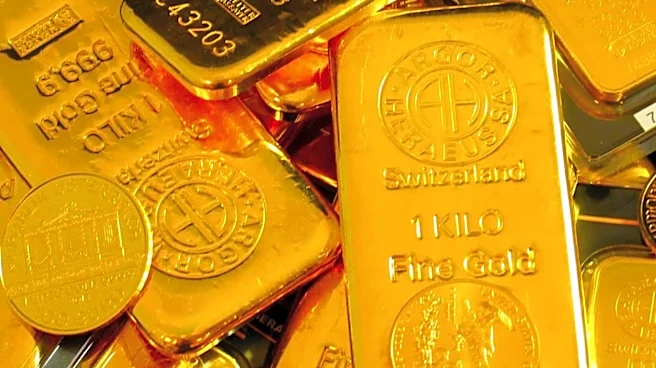
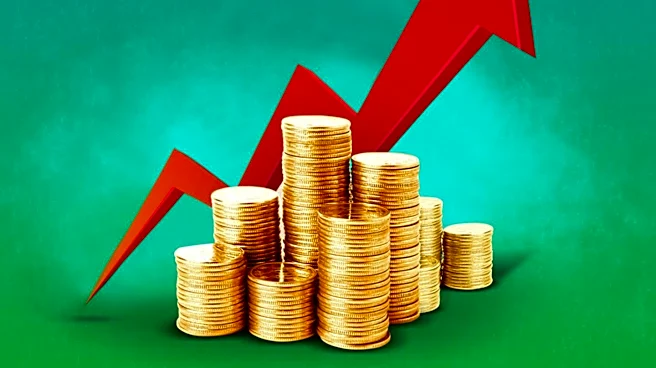
Gold prices have reached a seven-week high following a significant drop in U.S. non-farm payrolls for July, which has dampened expectations for a Federal Reserve rate hike. Spot gold increased by 2.3% to $4,336.11 per ounce, marking its highest level
since June 17. The Labor Department reported a decrease of 23,000 jobs in July, contrary to economists' forecasts of an 80,000 increase. This unexpected decline has led to a reassessment of the likelihood of a rate hike, with the probability of a September increase dropping to 43.9% from 57% prior to the jobs report. The weaker jobs data suggests a potential delay in rate hikes, which typically strengthens gold as a non-yielding asset.
Why It's Important?
The surge in gold prices reflects investor sentiment and market reactions to economic indicators, particularly employment data. A weaker labor market reduces the likelihood of immediate rate hikes, making gold more attractive as an investment. This development has significant implications for investors and financial markets, as it influences asset allocation and risk management strategies. Additionally, the potential delay in rate hikes could impact the U.S. dollar's strength, further affecting global trade and investment flows. The situation underscores the interconnectedness of economic data, monetary policy, and commodity markets.