





What's Happening?
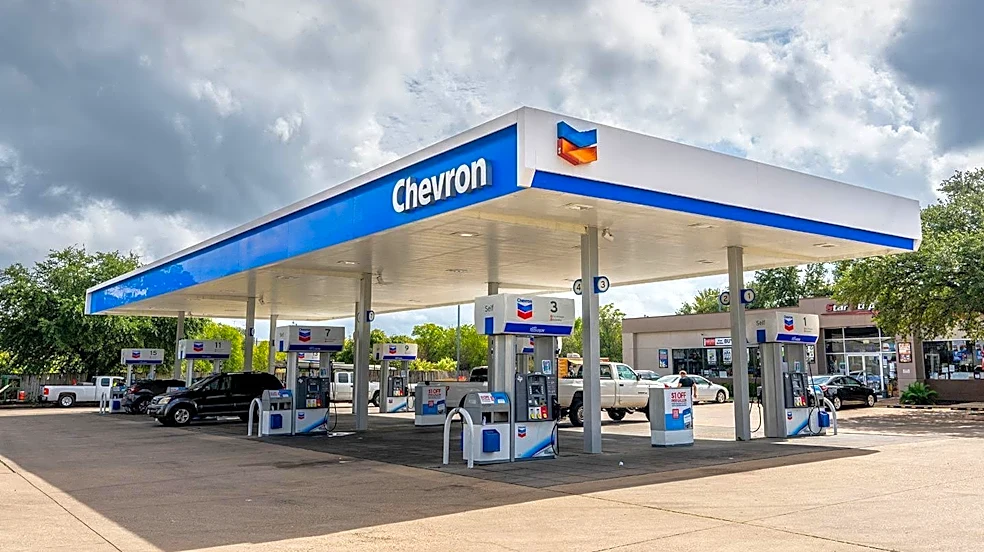
Chevron is initiating the process of marketing some of its mature oil and gas producing assets in the US Gulf of Mexico. This move is part of the company's strategy to align its portfolio with its priorities, which include focusing on high-growth developments
in the region. The assets being considered for sale include Petronius, Tubular Bells, and Llano, as well as working interests in several other operated and non-operated fields. Petronius began production in 2000, Tubular Bells in 2014, and Llano in 2004. Chevron aims to grow its US Gulf production to 300,000 barrels of oil equivalent per day by the end of this year, indicating a shift towards newer projects like Anchor and Ballymore, and continued exploration near existing facilities. The company has confirmed these plans to Reuters, emphasizing that there is no guarantee sales will occur.
Why It's Important?
This strategic divestment by Chevron signifies a broader trend within major energy companies to optimize their portfolios by shedding older, less productive assets in favor of newer, higher-growth opportunities. For the US energy sector, this could lead to a redistribution of ownership in the Gulf of Mexico, potentially allowing smaller or specialized operators to expand their footprint. The sale is expected to generate around $1 billion for Chevron, which can be reinvested into its priority projects. The timing is opportune, as market conditions are favorable with heightened buyer interest in American energy production and elevated oil prices supporting asset valuations. This move could enhance Chevron's operational efficiency and profitability by concentrating resources on more technologically advanced and higher-yield projects, while also providing opportunities for other companies to acquire established production assets.
What's Next?
Chevron will proceed with marketing these assets, a process expected to span several months. Potential buyers are anticipated to include international operators specializing in offshore development, US companies focused on the Gulf of Mexico basin, and possibly other energy majors. The success of these sales will depend on market interest and the final valuations achieved. If the sales proceed, Chevron will likely reallocate the capital towards its strategic growth areas, such as its ultra-high subsea pressure platform Anchor and the Ballymore project, which recently began production. The company will also continue its exploration efforts to discover new oil and gas resources near its existing infrastructure in the US Gulf. The outcome of these divestitures will further shape Chevron's operational profile in the region.
Beyond the Headlines
Chevron's decision to divest older assets reflects a strategic pivot common among integrated energy companies navigating the complexities of energy transition and shareholder demands for capital efficiency. While focusing on newer, more efficient projects, Chevron is also implicitly managing its carbon footprint by optimizing its asset base. The sale of mature fields could also present opportunities for companies with different operational cost structures or technological approaches to extend the life of these assets, potentially contributing to continued domestic energy supply. This move highlights the dynamic nature of the oil and gas industry, where continuous portfolio optimization is crucial for maintaining competitiveness and adapting to evolving market and environmental pressures. It also underscores the ongoing attractiveness of the US Gulf of Mexico for various types of energy producers.