
What's Happening?
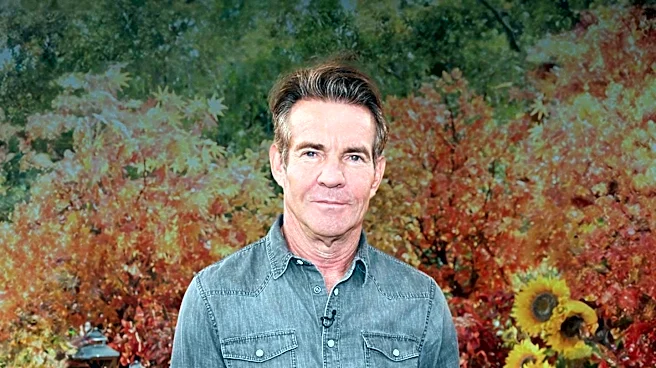
Dennis Quaid, the 72-year-old actor known for films like 'The Parent Trap', has revealed his fitness regimen, which he describes as simple and integrated into his lifestyle. According to an interview with
Yahoo!, Quaid states he eats 'anything I want' and attends the gym approximately three times a week. His routine heavily incorporates golf and transforming everyday activities into aerobic exercise. Quaid also mentioned dabbling in cold plunges, cryotherapy, and peptides, expressing a goal to live to 130. He emphasized the importance of consistent, proactive movement, a philosophy he adopted from an older individual at the Hollywood Y during his twenties. Quaid, who previously ran for 35 years, has since transitioned to cycling and yoga due to the impact on his joints, alongside regular gym workouts for lifting and sit-ups. His recent work includes the Christmas film 'A Dog's Perfect Christmas'.
Why It's Important?
Quaid's approach to fitness at 72 highlights a growing trend in the U.S. towards sustainable, lifestyle-integrated wellness, particularly among older adults. His emphasis on daily proactive movement rather than intense, restrictive routines could resonate with a broader demographic seeking longevity and health without extreme measures. The mention of emerging wellness practices like cold plunges, cryotherapy, and peptides also reflects an increasing public interest in biohacking and anti-aging technologies. This could influence consumer choices in health and fitness products and services, potentially boosting industries related to active aging, recreational sports like golf and cycling, and alternative wellness therapies. Quaid's public endorsement, even anecdotal, might encourage more individuals to explore these options, impacting the market for fitness equipment, wellness retreats, and health supplements.
What's Next?
As public figures like Dennis Quaid share their personal wellness journeys, there may be an increased public discourse around accessible and long-term fitness strategies for aging populations. This could lead to a greater demand for fitness programs tailored to seniors, emphasizing activities like golf, cycling, and yoga that are less impactful on joints. The mention of peptides and other advanced wellness techniques might also spur further interest and research into their efficacy and accessibility, potentially influencing the health and wellness industry to offer more such services. Additionally, Quaid's continued acting career, including recent roles, demonstrates the viability of maintaining a demanding professional life alongside a dedicated fitness routine, potentially inspiring others to prioritize health for sustained productivity and quality of life.
Beyond the Headlines
Quaid's narrative touches upon the broader cultural shift in how aging and fitness are perceived in the U.S. It moves away from the idea of fitness as solely for youth or intense athletic performance, towards a more holistic view of health as a lifelong endeavor. His enjoyment of exercise and the integration of physical activity into daily life suggest a psychological component to sustained wellness, where intrinsic motivation plays a crucial role. The exploration of cutting-edge treatments like peptides also raises ethical and accessibility questions regarding advanced anti-aging interventions. While these treatments are currently niche, their increasing visibility through celebrity endorsement could push them into mainstream discussion, prompting debates about equitable access to longevity-enhancing technologies and the societal implications of extending human lifespan.