







What's Happening?
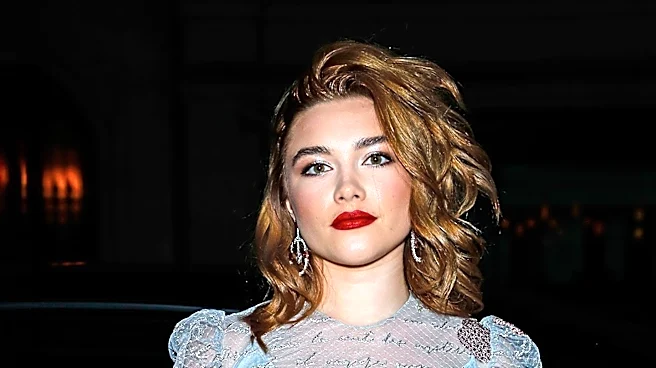
British actress Florence Pugh has publicly denied rumors that she has used Ozempic or undergone facial surgery. In a detailed statement, Pugh clarified that her physical changes are a result of new lifestyle habits, including adjustments to her diet,
exercise routine, and alcohol consumption. She emphasized that her goal is to build strength and prioritize her physical and mental health, not to conform to an ideal of thinness. Pugh also revealed that she has taken legal action against publications that circulated AI-generated images depicting her receiving cosmetic injections, which she found deeply damaging to her reputation. She stated that she has only lost two pounds and can now perform six pull-ups and lift 110 kilograms, highlighting her focus on strength.
Why It's Important?
Pugh's statement sheds light on the intense scrutiny faced by women in the public eye regarding their appearance and the pervasive issue of fatphobia within the film industry. Her experience underscores the pressure celebrities feel to meet unrealistic beauty standards and the rapid spread of misinformation, particularly through AI-generated content. By taking legal action against the dissemination of false images, Pugh is challenging the ethical boundaries of media and technology, setting a precedent for how public figures might combat AI-driven defamation. Her candid discussion about her health journey and the hurtful comments she has received since the beginning of her career brings attention to the broader societal implications of body shaming and the constant judgment of women's bodies.
What's Next?
Pugh's actions may encourage other public figures to address similar issues of body shaming and the misuse of AI-generated content. The legal proceedings she initiated against publications circulating AI-generated images could influence future regulations or industry standards regarding the use of artificial intelligence in media, particularly concerning celebrity likenesses. Her call for collective reflection on the constant commentary on others' appearances might also spark broader conversations about media literacy and the responsibility of internet users. This could lead to increased awareness and potentially a shift in how online communities engage with celebrity images and personal narratives.
Beyond the Headlines
This situation highlights deeper ethical and cultural dimensions concerning body image, celebrity culture, and the evolving landscape of digital media. The use of AI to create and disseminate false images raises significant questions about consent, privacy, and the potential for technology to harm individuals' reputations. Pugh's experience with fatphobia from early in her career points to systemic issues within the entertainment industry that prioritize certain body types over health and talent. Her refusal to let these comments dictate her life choices serves as a powerful message about self-acceptance and resilience in the face of public scrutiny, potentially inspiring a broader cultural shift towards more inclusive and realistic beauty standards.