


What's Happening?
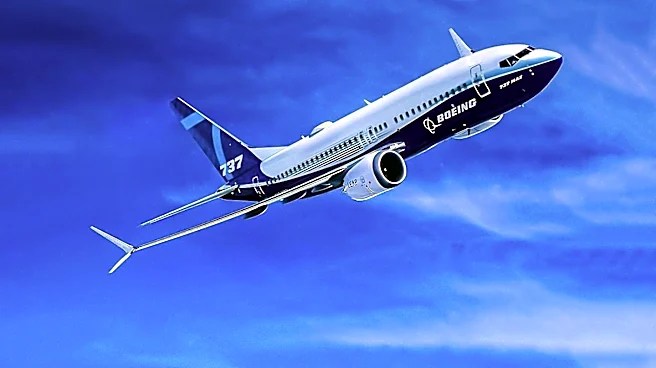
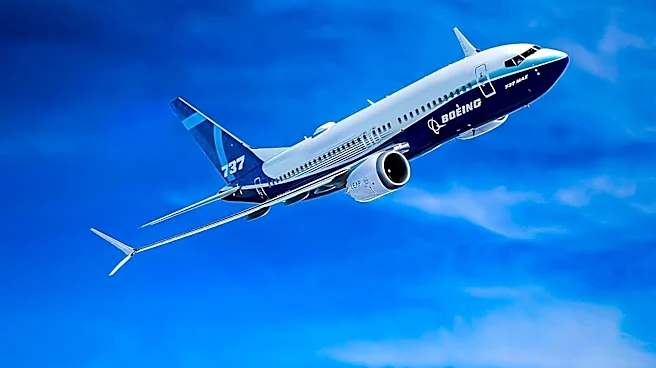
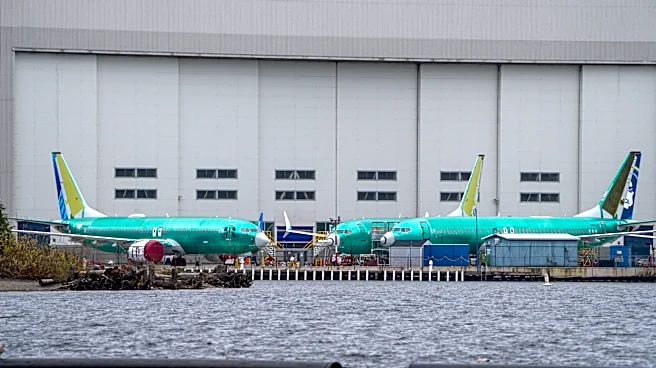
Boeing has failed to meet its Plan 47 deadline for increasing 737 Max production and has now set a new target of January 2027. The aerospace manufacturer is currently facing a record commercial aircraft backlog valued at $745.4 billion, with 6,300 planes
on order. This production delay follows a series of setbacks, including the halting of 737 Max production in December 2019, its resumption in May 2020, and subsequent regulatory limits imposed by the Federal Aviation Administration (FAA). The FAA restricted Boeing to producing 38 planes per month after a door plug incident on an Alaska Airlines flight in January 2024, later allowing the cap to rise to 42 per month. Kelly Ortberg, Boeing's chief executive, has been overseeing the company's production recovery and debt reduction efforts amidst these challenges. Additionally, the company's 777X model, originally slated for 2020 service, has been delayed due to GE engine issues and its folding wingtip design, with first deliveries now aimed for 2027.
Why It's Important?
Boeing's inability to ramp up production as planned has significant implications for its financial health and the broader aviation industry. The company needs to increase output to reduce its substantial debt, which, despite the challenges, has fallen to $25.2 billion from $30.4 billion a year earlier. For airlines, these delays mean longer waits for new aircraft, impacting their fleet planning and operational capacity. This can directly affect ticket pricing, as fuel costs, a major component of airfares, become more influential when new, more fuel-efficient planes are not delivered on schedule. The slower production rate also highlights the persistent repercussions of past incidents, such as the 2019 production halt and the 2024 door plug event, underscoring ongoing challenges in manufacturing and quality control. The situation creates uncertainty for both airlines and travelers, who may experience schedule changes and capacity constraints.
What's Next?
Boeing's immediate next step is to work towards its revised January 2027 target for meeting the Plan 47 production cap for the 737 Max. The company will report on whether this output target is achieved at that time. The Federal Aviation Administration will continue to monitor Boeing's production processes and adherence to safety standards, potentially adjusting production limits based on ongoing assessments. Airlines that have placed orders for Boeing aircraft will need to adjust their operational and financial forecasts to account for these extended delivery timelines. This could lead to further adjustments in flight schedules, route planning, and potentially ticket prices. The progress on the 777X deliveries, also slated for 2027, will be another critical indicator of Boeing's ability to overcome its production hurdles and meet its commitments to customers.
Beyond the Headlines
The ongoing production challenges at Boeing extend beyond immediate financial and operational impacts, touching upon deeper issues of supply chain resilience, regulatory oversight, and public trust in aerospace manufacturing. The repeated delays and incidents raise questions about the effectiveness of Boeing's internal quality control systems and the broader regulatory framework governing aircraft production. The reliance of global airlines on a duopoly of aircraft manufacturers means that production issues at one company can have widespread ripple effects across the entire aviation ecosystem, affecting competition, innovation, and consumer choice. Furthermore, the delays in introducing newer, more fuel-efficient aircraft like the 777X could have long-term environmental implications, as older, less efficient planes remain in service longer than anticipated, impacting the industry's sustainability goals. The situation underscores the complex interplay between engineering, safety, economics, and public confidence in a critical global industry.