




What's Happening?
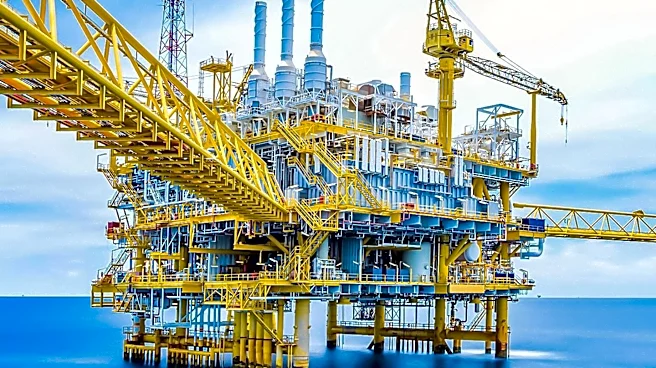
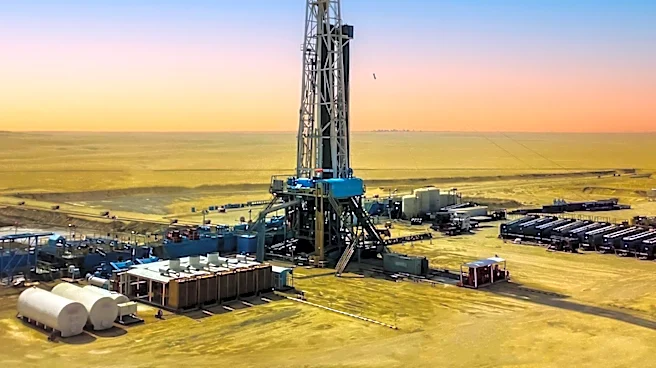
ExxonMobil CEO Darren Woods has indicated that Guyana is expected to remain a significant contributor to the company's production growth well into the next decade. The company has already secured approvals for seven developments in Guyana’s Stabroek Block,
representing over US$60 billion in committed investment. An eighth project, Longtail, is currently undergoing regulatory review, with a ninth proposed development, Haimara, having entered the environmental authorization process. Longtail is projected to begin production around 2030, followed by Haimara in the early 2030s, both of which are anticipated to boost offshore natural gas and condensate production. During ExxonMobil’s third-quarter earnings call, Woods emphasized the substantial additional growth potential in Guyana but stated that the company seeks greater technical and commercial certainty before committing to new projects. Continued exploration is also seen as a crucial element for future growth, underscoring Guyana's strategic importance in ExxonMobil's long-term global production portfolio.
Why It's Important?
This focus on Guyana by ExxonMobil underscores the increasing importance of offshore oil and gas exploration and production in the global energy landscape, particularly for U.S. energy companies. The significant investment in the Stabroek Block highlights a long-term commitment to fossil fuel production, which has implications for energy security, global supply chains, and the U.S. economy. For the U.S., a stable and growing supply of oil and gas from allies or partners can help mitigate price volatility and reduce reliance on less stable regions. The expansion also means substantial revenue for Guyana, potentially fostering economic development, but also raising questions about environmental impact and resource management. The continued emphasis on exploration suggests that major energy players anticipate sustained demand for hydrocarbons, influencing investment decisions and policy debates surrounding energy transition and climate change.
What's Next?
ExxonMobil will proceed with the regulatory review for the Longtail project and the environmental authorization process for Haimara. The company is expected to continue its exploration efforts in Guyana to identify further growth opportunities. Future announcements regarding new commitments will depend on achieving greater technical and commercial certainty. The progress of these projects will be closely watched by investors, environmental groups, and governments, as they represent significant long-term investments in fossil fuels. The success of these ventures could influence ExxonMobil's overall production targets and financial performance beyond 2030, potentially leading to further expansion in the region or similar offshore developments elsewhere.
Beyond the Headlines
The extensive investment in Guyana's offshore resources by ExxonMobil raises broader questions about the long-term role of fossil fuels in a world increasingly focused on climate change and renewable energy. While these projects promise economic benefits for Guyana and energy security for consumers, they also contribute to global carbon emissions. The ethical implications involve balancing economic development and energy needs with environmental stewardship. This development could also intensify geopolitical interest in the region, as major energy resources often attract international attention and competition. The long-term shift in energy portfolios for companies like ExxonMobil will be a critical indicator of how the global energy transition unfolds, with significant implications for both the environment and the global economy.