



What's Happening?
Iran's national soccer team was eliminated from the World Cup after a dramatic last-minute equalizer by Austria against Algeria. This result left Iran outside the top eight third-placed teams, ending their hopes of advancing to the knockout stage. Iran's campaign
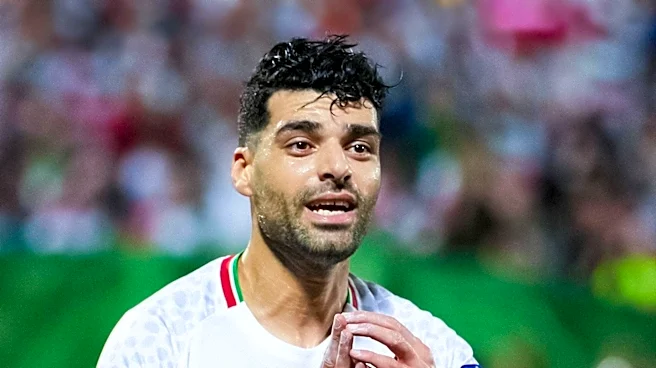
was marked by logistical challenges, including visa issues and the need to commute between Mexico and the U.S. for matches due to political tensions. Despite these hurdles, Iran remained unbeaten in their group, drawing with Belgium, New Zealand, and Egypt. The team's captain, Mehdi Taremi, expressed frustration over the situation, questioning whether Iran was truly welcome at the tournament.
Why It's Important?
Iran's elimination from the World Cup highlights the intersection of sports and geopolitics, particularly the impact of international relations on sporting events. The logistical challenges faced by the Iranian team underscore the broader implications of political tensions between Iran and the U.S., affecting not only diplomatic relations but also cultural and sporting exchanges. This situation raises questions about the inclusivity and fairness of international tournaments, where political considerations can overshadow athletic performance. The outcome also reflects on the resilience of the Iranian team, which managed to remain competitive despite significant off-field obstacles.
What's Next?
The aftermath of Iran's World Cup exit may prompt discussions within FIFA and other governing bodies about the need for clearer guidelines to ensure that political issues do not impede fair competition. There may also be diplomatic efforts to address the underlying tensions that contributed to the logistical challenges faced by the Iranian team. For Iran, the focus will likely shift to preparing for future international competitions, with an emphasis on overcoming similar obstacles. The situation could also lead to increased advocacy for sports diplomacy as a means to bridge political divides.