







What's Happening?
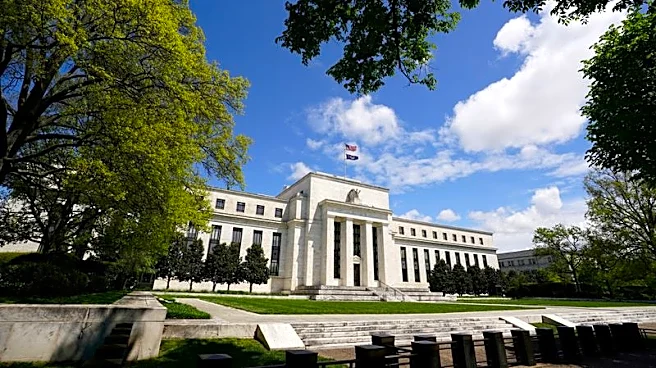
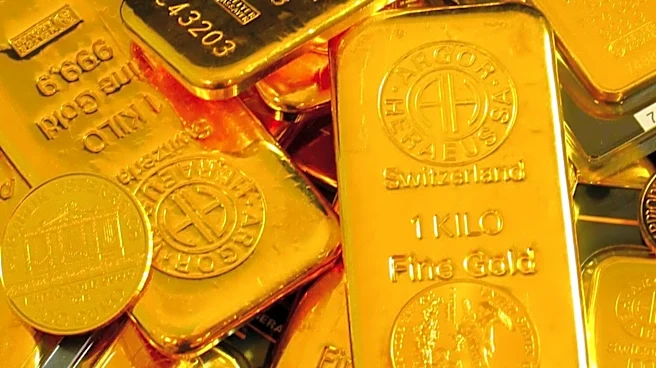
Gold prices fell to session lows after the Philadelphia Federal Reserve's manufacturing sector survey showed significant improvement in July. The survey's diffusion index for current general activity rose to 41.4, the highest since November 2021, indicating
expansion in the region's manufacturing activity. The report highlighted increases in new orders, shipments, and employment, with price indexes remaining elevated. Despite the positive outlook, future activity indicators suggested moderated growth expectations over the next six months.
Why It's Important?
The decline in gold prices reflects market reactions to positive economic data, which can influence investor sentiment and asset allocation. Gold is often seen as a safe-haven asset, and its price movements can be indicative of broader economic confidence. The strong performance in the manufacturing sector suggests resilience in the U.S. economy, which could impact monetary policy decisions and investor strategies. The data also highlights ongoing price pressures, which remain a concern for businesses and policymakers.
What's Next?
The manufacturing sector's growth may lead to increased economic activity and employment, supporting broader economic recovery efforts. However, the persistence of price pressures could pose challenges for inflation management and monetary policy. The Federal Reserve and market participants will likely continue to monitor these developments closely. Future surveys and economic indicators will provide further insights into the sustainability of this growth and its implications for the U.S. economy.