




What's Happening?
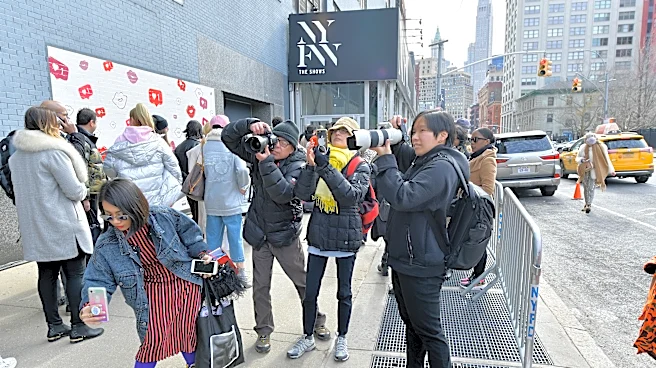
Misha Nonoo, a designer born in Bahrain and raised in London, launched her fashion label in New York in 2011. She gained significant attention in 2015 by becoming the first designer to host a New York Fashion Week show entirely on Instagram. Following
this innovative approach, Nonoo transitioned her brand to an on-demand production model. This means that each clothing piece is manufactured only after a customer places an order, a significant departure from traditional fashion industry practices of mass production. Her label is particularly recognized for its 'Husband Shirt,' which has become a signature item. This shift to on-demand manufacturing positions her brand as a notable example of sustainable practices within the fashion industry, aiming to reduce waste and overproduction.
Why It's Important?
Misha Nonoo's adoption of an on-demand production model holds significant importance for the U.S. fashion industry and broader consumer markets. This approach directly addresses critical issues of sustainability and waste, which are growing concerns for environmentally conscious consumers and regulatory bodies. By producing items only when ordered, Nonoo's brand minimizes excess inventory, reduces textile waste, and potentially lowers the carbon footprint associated with manufacturing and distribution. This model could influence other designers and brands to reconsider their production cycles, pushing the industry towards more ethical and sustainable practices. Consumers stand to gain from more thoughtfully produced garments, while traditional manufacturers might face pressure to adapt their supply chains to more flexible, demand-driven systems. This innovation also highlights the potential for technology, like social media platforms, to disrupt established industry norms and create new business models.
What's Next?
The success and visibility of Misha Nonoo's on-demand model could inspire further adoption of similar sustainable practices across the U.S. fashion landscape. Other designers and brands, particularly those focused on luxury or niche markets, may explore implementing on-demand or made-to-order systems to reduce waste and appeal to eco-conscious consumers. This could lead to increased investment in localized manufacturing and more agile supply chains within the United States. Furthermore, the fashion technology sector might see growth in platforms and tools designed to facilitate on-demand production, from digital design and prototyping to efficient small-batch manufacturing. Consumers may also become more accustomed to longer lead times for personalized or sustainably produced items, shifting expectations away from immediate gratification towards more mindful consumption.
Beyond the Headlines
Misha Nonoo's pioneering efforts extend beyond mere business strategy; they touch upon deeper ethical and cultural dimensions within the fashion industry. Her on-demand model challenges the prevailing fast-fashion culture, which often relies on rapid trend cycles, mass production, and disposability. By emphasizing quality over quantity and production based on actual demand, Nonoo promotes a more considered approach to clothing consumption. This could foster a cultural shift where consumers value craftsmanship, sustainability, and longevity in their wardrobes, moving away from the constant pursuit of new, cheap garments. Legally, this model might also influence discussions around labor practices and supply chain transparency, as smaller, more controlled production runs could allow for greater oversight of working conditions. Ultimately, Nonoo's brand serves as a case study for how innovation can drive both commercial success and positive social and environmental impact in a traditionally resource-intensive industry.