


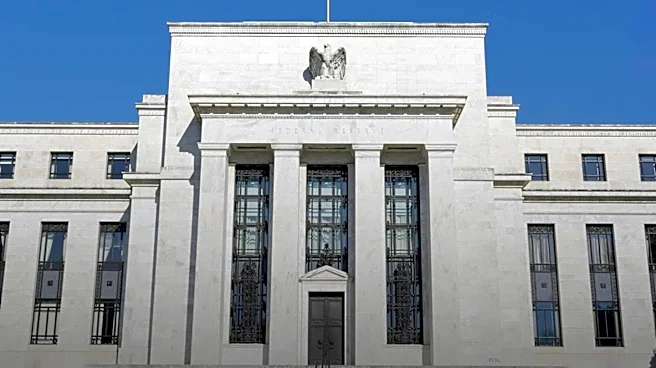
What's Happening?
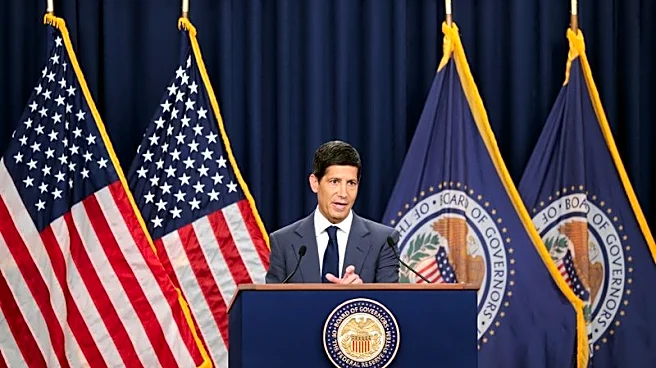
Fed Vice Chair Philip Jefferson stated in a November 19 speech that the 'AI buildout is exerting upward pressure on demand and inflation.' This comment comes as the U.S. economy experienced a 4.3% annualized growth rate in the third quarter, the fastest
since the third quarter of 2023, according to the Bureau of Economic Analysis. Core PCE prices, excluding food and energy, rose 3.3% in the year to October, marking the largest annual gain since November 2023. Business spending on equipment, largely related to artificial intelligence, increased at a 21.8% annual rate in the third quarter, the fastest since the third quarter of 2020. These economic indicators, coupled with a significant selloff in AI-related stocks, present a dilemma for the Federal Reserve ahead of its December 8-9 meeting. While AI initially fuels demand and inflation, Jefferson also noted that future productivity gains from AI 'could exert downward pressure on inflation,' creating a timing gap that complicates monetary policy.
Why It's Important?
The statements from Fed Vice Chair Philip Jefferson underscore a critical challenge for U.S. monetary policy: balancing the immediate inflationary impact of AI-driven demand with its potential for future disinflationary productivity gains. The robust economic growth and persistent inflation, partly fueled by AI investments, suggest a need for continued vigilance from the Federal Reserve. The recent selloff in AI stocks, however, introduces a new dynamic by tightening financial conditions, which could reduce the need for aggressive rate hikes. This situation directly impacts U.S. industries, particularly those involved in technology and manufacturing, as investment in AI infrastructure continues to surge. For consumers, the interplay between AI-driven demand and inflation could affect prices and economic stability. The Fed's decisions will influence borrowing costs for businesses and households, affecting investment, spending, and overall economic growth. The evolving role of AI in the economy presents both opportunities for growth and complexities for policymakers aiming to maintain price stability.
What's Next?
The Federal Reserve is expected to raise rates by a quarter percentage point at its December 8-9 meeting, where policymakers will also update their interest rate projections. The ongoing debate centers on whether inflation will necessitate consecutive rate hikes in January and March, especially given the recent drop in fuel prices. The impact of the AI-stock selloff on financial conditions will be closely monitored, as tighter conditions could potentially reduce the need for more aggressive monetary policy actions. Economists are divided on the long-term effects, with some suggesting that a slowdown in AI investment could cool the economy in 2027. Fed officials, including Governor Lisa Cook, have highlighted the significant investments in data center construction, which will continue to drive demand for materials like copper and lithium. The Fed's future decisions will hinge on a careful assessment of incoming economic data, particularly inflation figures and the evolving dynamics of AI's influence on both demand and supply.
Beyond the Headlines
The discussion around AI's impact on the U.S. economy extends beyond immediate inflation and interest rate decisions, touching upon deeper structural shifts. The 'timing gap' identified by Fed Vice Chair Philip Jefferson—where AI initially boosts demand and inflation before potentially leading to productivity gains and disinflation—highlights a fundamental challenge in economic forecasting and policy-making. This dynamic could lead to a period of increased volatility as the economy adjusts to rapid technological advancement. Furthermore, the significant investment in AI infrastructure, particularly data centers, points to a growing demand for specific raw materials, potentially creating new supply chain pressures and geopolitical considerations. The ethical and societal implications of widespread AI adoption, including its effects on labor markets and income inequality, are also critical long-term considerations that will shape future economic policy and societal well-being. The Fed's navigation of these complexities will be crucial for ensuring sustainable economic growth and stability in the U.S.