






What's Happening?
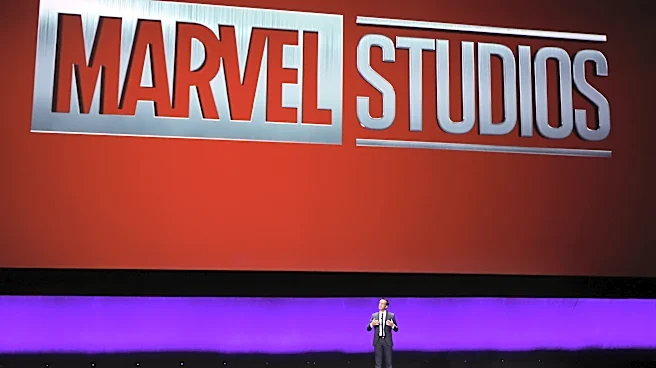
Marvel Studios president Kevin Feige has indicated that the X-Men will become a driving force in the Marvel Cinematic Universe (MCU) following the upcoming 'Avengers: Doomsday' and 'Avengers: Secret Wars' films. Feige described 'Secret Wars' not as a full
reboot, but as a 'reset' for the MCU. The 2028 Marvel movie lineup, which includes 'X-Men' in May, Ryan Gosling’s 'Ghost Rider' in July, and 'Black Panther III' in December, positions the mutants prominently. Feige emphasized the importance of the X-Men, stating that their comic book sagas offer an 'almost limitless' potential for new stories in the MCU, especially now that Marvel Studios has access to these characters following Disney’s acquisition of 20th Century Fox. He also suggested that Marvel's approach to the X-Men will explore characters and storylines not previously given cinematic attention, moving beyond repeated adaptations like 'The Dark Phoenix Saga'.
Why It's Important?
This strategic shift by Marvel Studios to center the X-Men in the MCU's future has significant implications for the entertainment industry and Marvel's long-term franchise strategy. By integrating the X-Men, Marvel gains access to a vast catalog of characters and narratives, potentially revitalizing audience interest and expanding the MCU's thematic scope. This move could lead to a new era of storytelling, moving away from the 'Infinity Saga' and introducing fresh conflicts and character dynamics. For Disney, leveraging the X-Men property, acquired through the Fox merger, is crucial for maximizing its investment and maintaining its dominant position in the superhero film market. The introduction of new teams like X-Force, Excalibur, Alpha Flight, and X-Factor could also create numerous opportunities for new film and television projects, driving content production and associated revenue streams. This pivot aims to ensure the MCU's continued relevance and commercial success in a competitive entertainment landscape.
What's Next?
Following the 'reset' initiated by 'Avengers: Secret Wars,' the MCU is set to introduce the X-Men in May 2028, marking a new chapter for the franchise. This will likely be followed by the gradual integration of various mutant characters and teams, such as X-Force, Excalibur, Alpha Flight, and X-Factor, into the broader MCU narrative through subsequent films and TV shows. Marvel Studios will likely focus on developing storylines that have not been extensively explored in previous cinematic adaptations, aiming to offer fresh perspectives to both long-time comic fans and new audiences. The success of these initial X-Men projects will heavily influence the direction and expansion of the MCU beyond 2028, potentially establishing the mutants as central figures for the next major saga. Audiences can anticipate a strategic rollout of new characters and interconnected plots designed to build a new overarching mythology.
Beyond the Headlines
The decision to place the X-Men at the forefront of the MCU's next evolution carries deeper implications beyond mere cinematic expansion. The X-Men's core themes of prejudice, acceptance, and societal conflict resonate strongly, offering Marvel Studios a platform to explore complex social and ethical issues within a blockbuster framework. This could allow the MCU to tackle more mature and thought-provoking narratives, potentially broadening its appeal and critical acclaim. Furthermore, the integration of the X-Men, with their inherent 'misfit' status, could symbolize a shift in the MCU's narrative focus, moving towards stories that champion diversity and challenge established norms. This strategic move could also influence other studios to re-evaluate their own franchise strategies, potentially leading to a trend of deeper thematic exploration in mainstream superhero content. The long-term impact could be a more socially conscious and diverse landscape within the superhero genre.