






What's Happening?
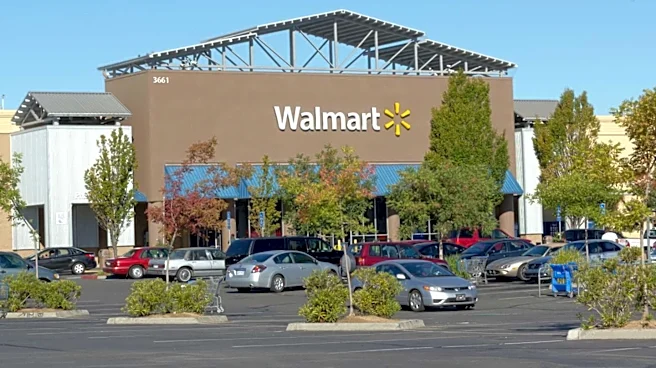
New York Magazine has reported on Walmart's efforts to elevate its fashion offerings, with some clothing lines now designed by fashion heavyweights like Brandon Maxwell and collaborations with celebrities such as Millie Bobby Brown and Megan Thee Stallion.
This 'glow-up' aims to transform Walmart from a bargain-basement retailer into a destination for more fashion-conscious shoppers, including hosting pop-ups in Soho. However, this perceived 'gentrification' of Walmart's image is juxtaposed with ongoing criticisms of the company's corporate practices. These include its historical role in globalization and alleged labor issues, its current wage structure where many employees rely on public assistance despite rising profits and executive pay, and its recent decision to scale back diversity, equity, and inclusion (DEI) initiatives. While Walmart maintains some environmental goals, its continuous production of goods makes achieving these difficult.
Why It's Important?
This story is important because it highlights the complex and often contradictory nature of corporate identity and social responsibility in the U.S. Walmart's attempt to 'gentrify' its brand through fashion, while simultaneously facing scrutiny over labor practices and DEI rollbacks, reflects a broader tension between consumer perception and corporate ethics. The fact that many Walmart employees still rely on public assistance, despite the company's substantial profits and high executive compensation, underscores persistent issues of income inequality and the living wage debate in the American retail sector. The company's shift away from DEI efforts also signals a response to conservative pressures, which could have wider implications for corporate social responsibility trends across U.S. industries. This narrative challenges consumers to look beyond superficial brand makeovers and consider the full scope of a company's impact.
What's Next?
Walmart will likely continue its efforts to enhance its brand image and appeal to a broader customer base, particularly through fashion and other lifestyle offerings. However, the scrutiny over its labor practices, wage policies, and DEI commitments is also expected to persist. Activist groups and labor advocates will likely continue to pressure Walmart to improve employee wages and benefits, potentially influencing public perception and consumer choices. The company's balance between profit motives, environmental goals, and social responsibility will remain a key area of public and media interest. Future developments may include further adjustments to its DEI policies, responses to ongoing labor discussions, and continued efforts to manage its supply chain ethics, especially as it seeks cheaper manufacturing locations outside of China.
Beyond the Headlines
The 'gentrification of Walmart' metaphor extends beyond fashion to touch upon deeper societal shifts and corporate strategies. It reflects a broader trend where companies attempt to rebrand and appeal to more affluent demographics, sometimes without fundamentally altering their core business practices or addressing underlying social issues. This phenomenon raises questions about authenticity in corporate social responsibility and the effectiveness of superficial changes in addressing systemic problems. The article implicitly critiques the consumer culture that can be swayed by aesthetic improvements while overlooking ethical concerns. It also highlights the economic realities for many Americans, where even with a 'glow-up,' a major retailer like Walmart remains a primary shopping destination due to price, underscoring the ongoing struggle with affordability and the widening gap between corporate wealth and worker wages in the U.S.