

What's Happening?
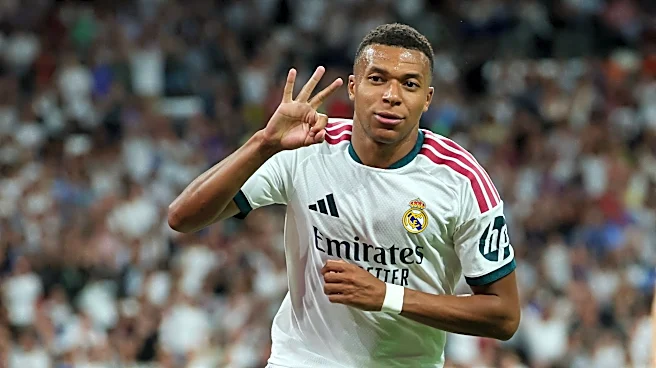
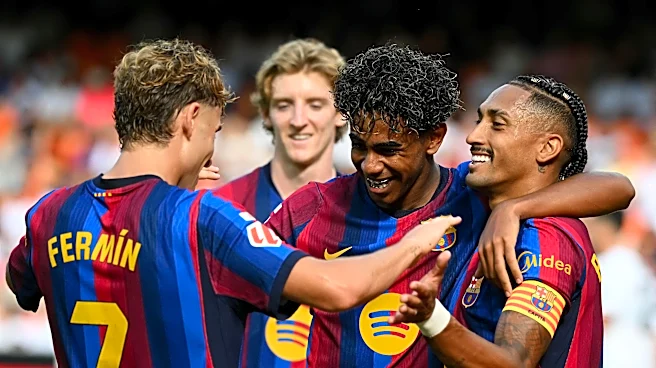
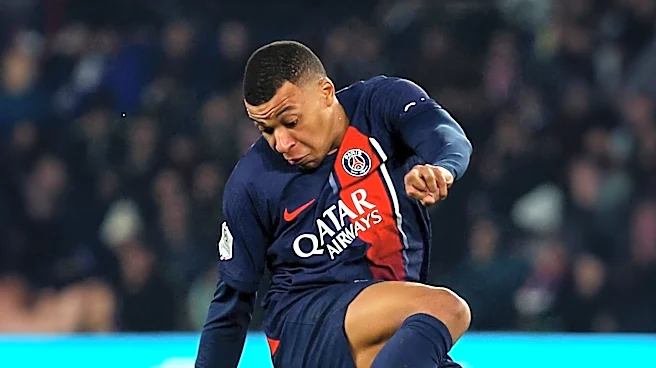
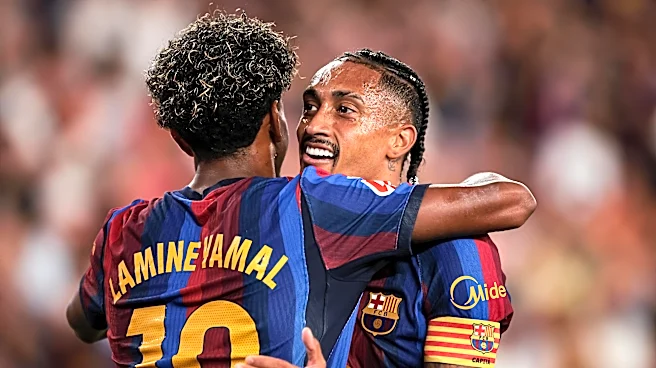
Kylian Mbappe, the Real Madrid forward, has responded to recent criticisms regarding his defensive contributions, particularly when compared to other attackers like Ousmane Dembele of Paris Saint-Germain and Raphinha of Barcelona. Mbappe acknowledged
that both he and teammate Vinicius Junior have areas for improvement in their defensive work without the ball. However, he firmly rejected the notion that forwards should be primarily judged through direct comparisons of their defensive pressing. Instead, Mbappe emphasized his superior goal-scoring output as a key metric of his performance. He stated that while every player, including himself, must strive for improvement in all aspects of the game, his primary role and strength lie in scoring goals for Real Madrid.
Why It's Important?
This discussion highlights a recurring debate in modern football regarding the evolving roles and expectations of elite attackers. Traditionally, forwards were primarily judged on their offensive output, but contemporary tactics often demand significant defensive contributions, including pressing and tracking back. Mbappe's comments underscore the tension between these expectations and the specialized skills of a prolific goal-scorer. For Real Madrid, managing this balance is crucial for team cohesion and performance. If top-tier forwards like Mbappe are perceived as not contributing sufficiently defensively, it could create tactical vulnerabilities or internal team dynamics issues. Conversely, overemphasizing defensive duties might detract from their primary strength, which is scoring goals, potentially impacting the team's overall offensive power and results. This situation also reflects broader trends in player evaluation and the increasing scrutiny placed on every facet of a star player's game.
What's Next?
Moving forward, the focus will likely remain on how Kylian Mbappe integrates his offensive prowess with the defensive requirements of Real Madrid's tactical system. While he has acknowledged room for improvement, his emphasis on goal-scoring suggests he will continue to prioritize his attacking role. Coaches and analysts will be observing whether his defensive contributions increase or if the team's strategy adapts to leverage his strengths while mitigating any defensive gaps. The ongoing comparisons with other forwards known for their pressing will also likely persist, fueling further discussion about the ideal profile of a modern elite attacker. Ultimately, Real Madrid's performance in upcoming matches and competitions will be a key indicator of how effectively this balance is struck and whether Mbappe's approach aligns with the team's overall success.
Beyond the Headlines
Beyond the immediate tactical implications, Mbappe's response touches upon the broader philosophical debate within football about player specialization versus all-around capability. In an era where data analytics increasingly dissects every player action, the pressure on athletes to excel in all areas intensifies. Mbappe's assertion of his primary strength as a goal-scorer, despite acknowledging defensive shortcomings, reflects a potential pushback against the homogenization of player roles. This could influence how young players are developed and how teams construct their squads, potentially leading to a re-evaluation of the value of specialized talent versus versatile players. It also highlights the psychological aspect of elite sports, where players must navigate public criticism and maintain confidence in their core abilities amidst constant scrutiny and comparison.