







What's Happening?
Pakistan State Oil (PSO) and Kuwait Petroleum Corporation (KPC) have reached an agreement to continue the supply of diesel and jet fuel from Kuwait to Pakistan. This understanding was solidified during a visit by a PSO delegation, led by Chief Executive
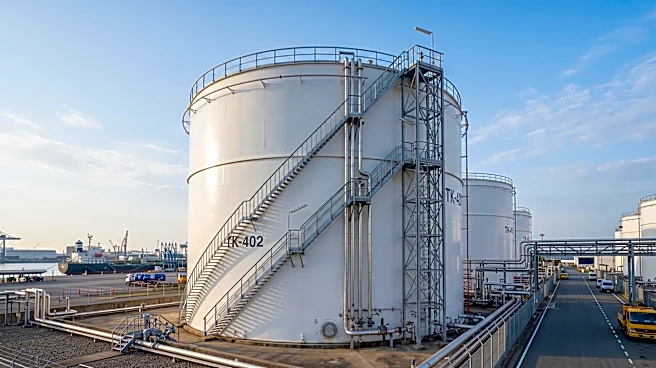
Jowad Ahmed Cheema, to Kuwait, where meetings were held with KPC's chief executive and deputy chairman, Sheikh Nawaf Saud Al-Sabah, and Sheikh Khaled Ahmed Al-Sabah, head of international marketing at KPC. The two state-owned companies, which have a partnership spanning approximately 50 years, also agreed to revise the terms of their existing supply deals to align with current market conditions. A significant aspect of the agreement is KPC's utilization of Pakistan’s storage and port facilities under the recently revised Customs Bonded Storage Policy. This policy permits imported petroleum products to be held in bonded storage for sale within Pakistan or re-export to other regional markets. Discussions also encompassed broader energy sector collaboration, including shipping, refining, base oil supplies, lubricant marketing, and potential KPC investments in Pakistan’s gas, refining, storage, and logistics sectors.
Why It's Important?
This agreement is crucial for Pakistan's energy security, particularly as the ongoing Iran war has disrupted Gulf shipping, impacting fuel supplies and costing Pakistan $387 million in exports to the Gulf. By securing continued diesel and jet fuel supplies from Kuwait, Pakistan can mitigate potential shortages and stabilize its domestic energy market. The utilization of Pakistan's storage and port infrastructure by KPC under the revised Customs Bonded Storage Policy not only strengthens energy security but also promotes regional trade and attracts foreign investment into Pakistan's energy sector. This collaboration could lead to significant infrastructure development and job creation within Pakistan. Furthermore, the broader discussions on investment in gas, refining, storage, and logistics sectors indicate a long-term strategic partnership that could enhance Pakistan's overall energy infrastructure and reduce its reliance on volatile international markets. The agreement also signals a commitment to regional economic stability amidst geopolitical tensions.
What's Next?
The remaining paperwork for the agreement is expected to be completed soon with the relevant Pakistani departments. PSO has expressed its commitment to translating these discussions into tangible outcomes over the next 50 years, suggesting a long-term strategic partnership. This could involve KPC initiating investments in Pakistan's energy infrastructure, including gas, refining, storage, and logistics sectors, in the near future. The revised Customs Bonded Storage Policy will likely see increased activity at Pakistani ports and storage facilities as KPC begins to utilize them for regional distribution. Domestically, the Pakistani government recently cut diesel prices, and PSO is set to take over setting LPG prices with SSGC under a new plan, which could further impact the local energy market. The ongoing geopolitical situation in the Gulf will continue to influence the importance and implementation of such energy security agreements.
Beyond the Headlines
The expanded partnership between PSO and KPC extends beyond mere fuel supply, hinting at a deeper integration of Pakistan into regional energy trade networks. KPC's interest in Pakistan's storage and port infrastructure could transform Pakistan into a regional energy hub, facilitating the flow of petroleum products to other markets. This strategic positioning could enhance Pakistan's geopolitical influence and economic leverage in the region. The revised Customs Bonded Storage Policy represents a significant policy shift, potentially attracting more international energy companies to utilize Pakistan's logistical capabilities. This could lead to a more robust and diversified energy supply chain for the broader region, reducing vulnerabilities to disruptions in traditional shipping routes. The long-term commitment expressed by PSO suggests a vision for sustainable energy cooperation that could foster economic stability and growth for both nations, potentially setting a precedent for similar collaborations in the future.