




What's Happening?
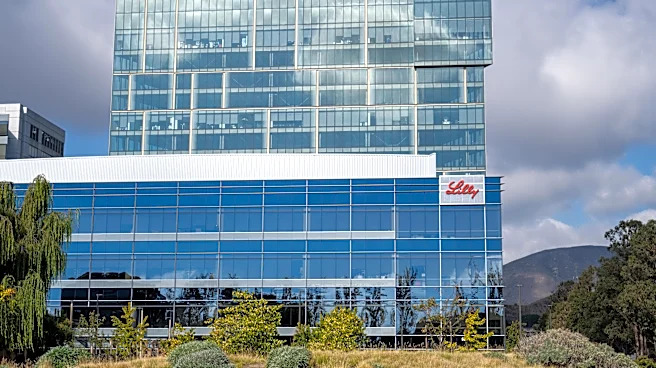
Eli Lilly, a prominent pharmaceutical company headquartered in Indianapolis, Indiana, has experienced substantial revenue growth in recent years, largely attributed to its dominance in the weight loss drug market. The company's GLP-1 class drugs, Mounjaro
(for type 2 diabetes) and Zepbound (for weight loss), have been key drivers. These drugs, which regulate appetite and blood sugar levels, have led to double-digit revenue gains. An investment of $1,000 in Eli Lilly five years ago would now be worth over $5,000, reflecting a stock climb of more than 420%. The company's recent earnings report highlighted a 39% increase in revenue, exceeding $24 billion, primarily due to the performance of Mounjaro and Zepbound. Eli Lilly is also actively developing new weight loss drug candidates, including retatrutide, which is currently in phase 3 studies and shows potential for even greater weight loss efficacy.
Why It's Important?
Eli Lilly's success in the weight loss drug market signifies a major shift in the pharmaceutical industry and has significant implications for public health and the economy. The high demand for GLP-1 drugs underscores a growing societal focus on weight management and the medical community's increasing acceptance of pharmacological interventions for obesity. This trend could lead to improved health outcomes for millions of Americans struggling with obesity and related conditions, potentially reducing healthcare costs associated with chronic diseases. Economically, Eli Lilly's robust growth positions it as a leader in the pharmaceutical sector, attracting substantial investor interest and potentially influencing research and development priorities across the industry. The competition with other pharmaceutical giants like Novo Nordisk in the oral GLP-1 space also indicates a rapidly evolving and highly lucrative market segment.
What's Next?
Eli Lilly is poised to continue its expansion in the weight loss market with new product developments. The company has recently secured approval for Foundayo, a new GLP-1 drug in pill format, which is expected to significantly broaden the accessibility and appeal of these treatments. Furthermore, the ongoing phase 3 studies for retatrutide suggest the potential for even more effective weight loss solutions in the near future. The company's strategic focus on its pipeline of weight loss drug candidates indicates a commitment to maintaining its leadership position. Investors will be closely watching for further clinical trial results and market adoption of new products, as these will determine whether Eli Lilly can sustain its impressive growth trajectory and potentially achieve another substantial increase in stock value over the next five years.
Beyond the Headlines
The rapid rise of GLP-1 drugs like those from Eli Lilly raises broader ethical and societal questions beyond their immediate medical benefits. The widespread adoption of these medications could reshape perceptions of obesity, moving it further into the realm of treatable medical conditions rather than solely a lifestyle issue. This shift may influence public health policies, insurance coverage, and even cultural attitudes towards body image. There are also considerations regarding equitable access to these expensive treatments and the potential for over-reliance on pharmacological solutions without addressing underlying lifestyle factors. The long-term effects of widespread GLP-1 use on public health infrastructure and individual well-being will be a critical area of observation, as will the ethical implications of direct-to-consumer marketing for such powerful medications.