




What's Happening?
A new technology-driven movement, computer coin grading, is emerging to standardize the evaluation and grading of coins. This approach aims to replace the traditional reliance on human sight with quantitative data from scientifically calibrated devices.
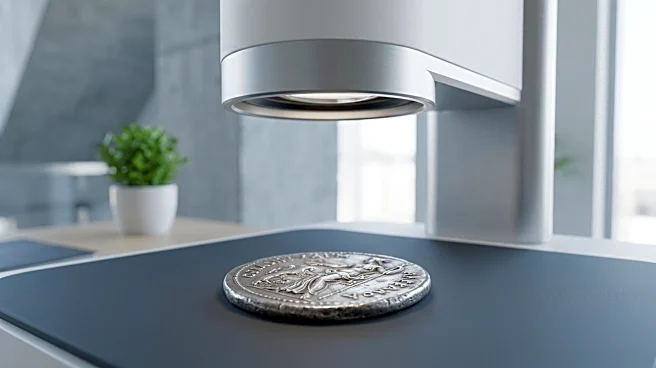
An example of this innovation is the QCG OCS200 CoinGradr, an Internet of Things (IoT) digital microscope that allows collectors to scan and grade coins with scientific precision from home. The hardware captures high-resolution images, which are then processed in the cloud. Unlike standard AI machine learning, this advanced computer grading utilizes computer vision and rule-based mathematical models tailored for each business sub-series of a coin's obverse and reverse. The system analyzes various traits and compiles a comprehensive digital report within 15 minutes, featuring a unique digital fingerprint for each coin. This fingerprint is crucial because no two coins wear or scratch identically, providing an unchangeable identity for the specific piece of metal. The report also outputs a Quantitative Sheldon Grade and links the coin to a global database, offering an estimated market value by checking online marketplaces.
Why It's Important?
This technological advancement is poised to significantly impact the numismatics market, offering a new standard for coin assessment. For generations, collectors have faced frustration in aligning their coin evaluations with those of experts, leading to inconsistencies and subjective grading. Computer coin grading introduces an unbiased, repeatable, and scientifically precise method, which can foster greater transparency and trust within the market. The ability to generate a unique digital fingerprint for each coin ensures authenticity and provides a verifiable record, potentially reducing fraud and disputes. Furthermore, by linking coins to a global database and providing market value estimates, the technology empowers collectors with more accurate and accessible information, enabling more informed buying and selling decisions. This shift could democratize access to expert-level grading, making it available to a broader range of collectors beyond professional numismatists.
What's Next?
The adoption of computer coin grading technology is expected to continue expanding, potentially leading to its widespread integration into the numismatic community. As more collectors and dealers embrace tools like the QCG OCS200 CoinGradr, the industry may see a gradual shift away from purely subjective human grading towards a hybrid model that incorporates both expert opinion and technological analysis. The development of more sophisticated computer vision and mathematical models could further refine grading accuracy and efficiency. There is also potential for this technology to influence how coins are authenticated, cataloged, and traded on online platforms, possibly leading to new industry standards for digital certification. Future iterations might also include enhanced features for historical data tracking and predictive analytics regarding coin value fluctuations, offering even greater utility to collectors and investors.
Beyond the Headlines
Beyond the immediate benefits of standardized grading, this technology raises deeper implications for the preservation and study of numismatics. The creation of a digital fingerprint for each coin contributes to a comprehensive digital archive of historical artifacts, ensuring their unique characteristics are recorded and preserved indefinitely. This digital record can be invaluable for research, allowing scholars to track wear patterns, material degradation, and other physical changes over time with unprecedented precision. Ethically, the shift towards objective grading could challenge the traditional authority of human experts, prompting discussions about the role of human judgment versus algorithmic assessment in specialized fields. Culturally, it represents another step in the broader trend of digitizing and standardizing aspects of collecting and connoisseurship, potentially attracting a new generation of tech-savvy collectors to the hobby while also ensuring the long-term integrity of numismatic heritage.