


What's Happening?
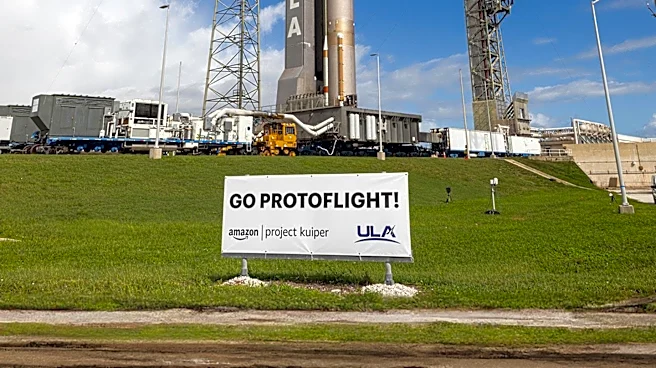
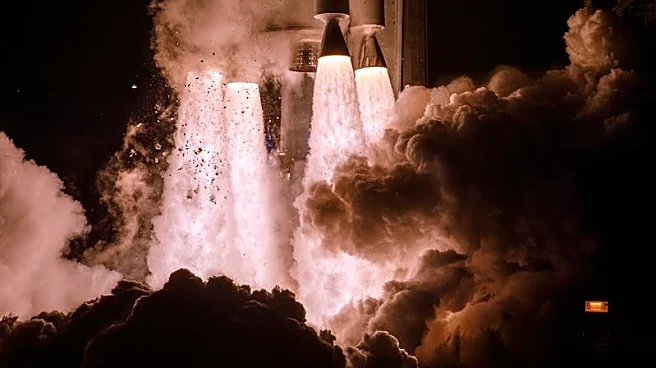
A United Launch Alliance (ULA) Vulcan rocket malfunctioned approximately 10 minutes after liftoff on Sunday, failing to reach orbit and resulting in the loss of 40 Project Kuiper internet satellites for Amazon. This incident marks ULA's first total mission
failure since its formation in 2006. The launch was Vulcan's first in nine months and the initial flight of 38 Vulcan launches Amazon had purchased for its satellite internet constellation, intended to rival SpaceX's Starlink. ULA has stated it is investigating the cause of the anomaly and aims to return to flight swiftly. Amazon acknowledged the inherent risks of launch, especially for inaugural missions, and expressed continued trust in ULA as a partner. The rocket lifted off from Cape Canaveral Space Force Station after delays and a countdown hold, though it is unclear if these issues contributed to the failure.
Why It's Important?
This launch failure represents a significant setback for Amazon's Project Kuiper, a crucial initiative aimed at providing global broadband internet access. The loss of 40 satellites impacts Amazon's deployment schedule and its competitive position against SpaceX's Starlink, which already has a substantial lead in satellite numbers. Project Kuiper is a multi-billion dollar investment for Amazon, and delays in deployment could affect its ability to meet regulatory deadlines and establish market share. For ULA, this failure is a blow to its new Vulcan rocket, which is intended to replace its older Atlas 5. The investigation and subsequent return to flight timeline will be critical for ULA's reputation and its ability to secure future contracts, particularly for national security missions. The incident also highlights the inherent risks and complexities of space launches, even for established providers, impacting investor confidence and the broader commercial space industry.
What's Next?
ULA will conduct a thorough investigation to determine the root cause of the Vulcan rocket's malfunction. This process will involve analyzing telemetry data and working with Amazon and other stakeholders. Until the cause is identified and rectified, future Vulcan launches, including those for Amazon, will likely be delayed. Amazon's next scheduled Project Kuiper launch is on an Ariane 6 mission, carrying 36 satellites, targeted for November 23. Amazon also has launch reservations with Blue Origin's New Glenn and SpaceX's Falcon 9, which may become more critical in light of the Vulcan failure. The Federal Communications Commission had previously granted Amazon permission to continue deploying satellites even if it missed an earlier deadline, but continued delays could impact its long-term deployment goals and spectrum priority. ULA's ability to quickly identify and fix the issue will be crucial for its future operations and its role in the U.S. space launch market.
Beyond the Headlines
The failure of the Vulcan rocket underscores the intense competition and high stakes in the burgeoning satellite internet industry. Companies like Amazon are investing heavily to establish global broadband constellations, which promise to connect underserved areas and generate significant revenue. However, these ambitious projects are highly dependent on reliable launch services. This incident could lead to a re-evaluation of launch diversification strategies by satellite operators, potentially increasing demand for alternative providers. Furthermore, the failure highlights the technical challenges of developing and operating new heavy-lift rockets, even with extensive testing. The long-term implications could include increased scrutiny on launch vehicle reliability, potential shifts in market share among launch providers, and a renewed focus on redundancy and resilience in satellite deployment plans across the industry. The incident also serves as a reminder of the significant financial and technological risks associated with space exploration and commercialization.