


What's Happening?
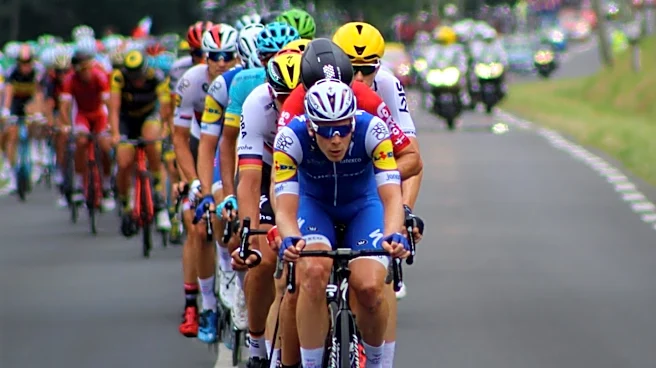
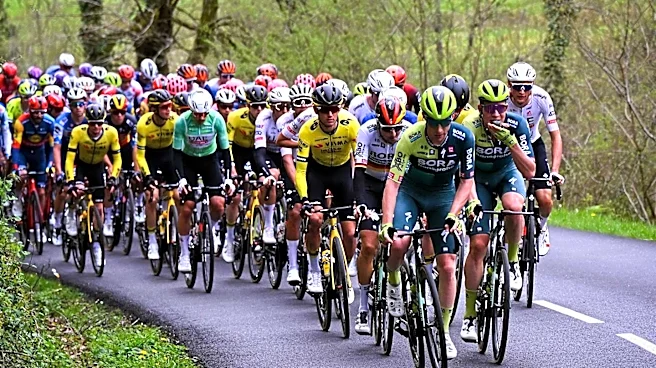
Stage 9 of the 2026 Tour de France was notably shortened by 30 kilometers due to a red alert for extreme heat in the Massif Central region, with temperatures expected to exceed 40 degrees Celsius. The stage, characterized by its undulating terrain, was anticipated
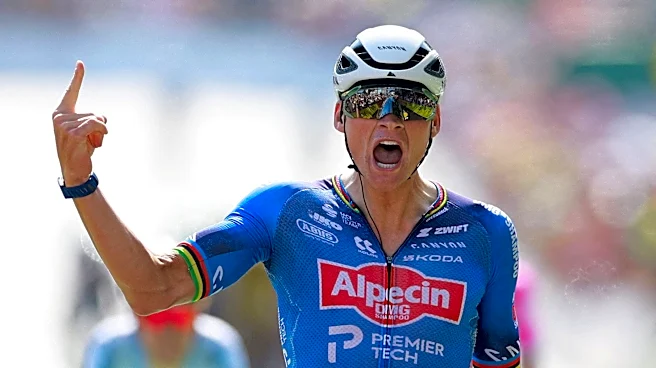
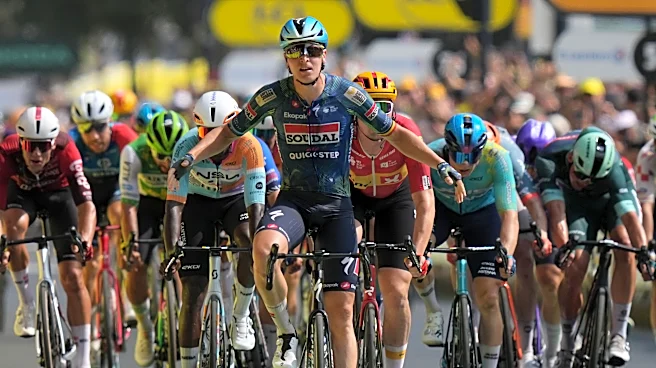
to favor breakaway riders. Mathieu van der Poel emerged victorious after a strategic and grueling race, which saw him break away on the final climb and maintain his lead to the finish line in Ussel. The race was marked by intense competition among the breakaway group, with Van der Poel's decisive move on the Mont Bessou climb proving pivotal. Despite the challenging conditions, the race proceeded with a reduced distance, highlighting the ongoing impact of extreme weather on the event.
Why It's Important?
The decision to shorten the stage underscores the increasing influence of climate conditions on major sporting events, particularly in cycling, where athletes are directly exposed to the elements. This adaptation reflects a growing need for sports organizations to prioritize athlete safety amid rising global temperatures. The victory by Van der Poel not only adds to his illustrious career but also demonstrates the strategic depth required to succeed in such challenging conditions. The stage's outcome could influence team strategies in future races, as teams may need to adapt to unpredictable weather patterns and their impact on race dynamics.
What's Next?
As the Tour de France progresses, teams and organizers will likely continue to monitor weather conditions closely, potentially leading to further adjustments in race routes or schedules. The ongoing heatwave may prompt discussions about long-term strategies for managing extreme weather in cycling, including potential changes to race timing or additional safety measures. Teams will also reassess their strategies, particularly those affected by the heat, to optimize performance in the remaining stages. The rest day following this stage provides an opportunity for recovery and strategic planning as the race moves into its second week.