




What's Happening?
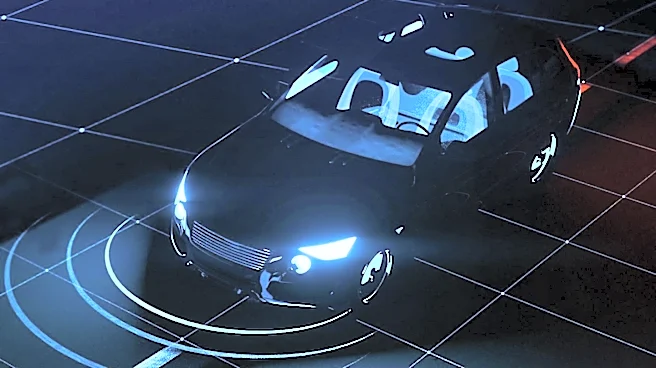
General Motors (GM) is actively developing and testing advanced driver assistance systems (ADAS) with the goal of launching 'eyes-off' autonomous driving technology by 2028. This next generation of their Super Cruise system, which currently offers 'hands-free'
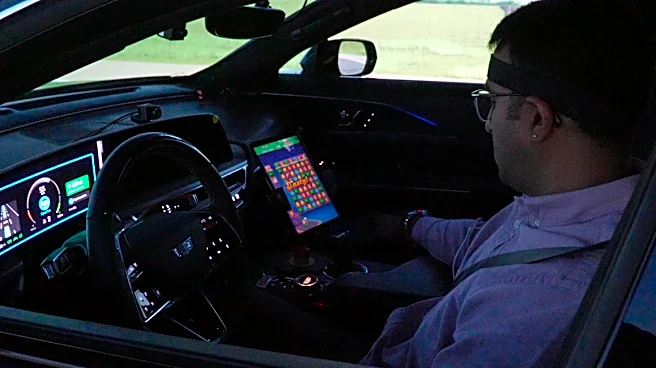
driving on over 630,000 miles of roads in the U.S. and Canada, will allow drivers to safely divert their attention from the road. At the GM Global Technical Center in Warren, Michigan, hundreds of volunteer drivers are participating in immersive 360-degree simulators. These simulations expose drivers to various scenarios, including regular driving, construction zones, and adverse weather, while monitoring their physiological responses like eye movement and heart rate. This extensive testing, combined with data collection and artificial intelligence, is crucial for predicting and enabling vehicles to respond to unexpected real-world situations, such as sudden obstacles or unforeseen detours. The technology aims to evolve beyond current 'hands-free' capabilities, which are available in over 20 GM models, to a state where drivers can engage in other activities within the cabin, like using a phone or watching a movie, while the vehicle handles driving.
Why It's Important?
The development of 'eyes-off' autonomous driving technology by General Motors signifies a major shift in the automotive industry, promising significant implications for U.S. consumers, the economy, and regulatory frameworks. For consumers, this technology could offer unprecedented convenience by freeing up driving time for other activities, potentially transforming daily commutes and long-distance travel. This enhanced convenience is expected to drive consumer willingness to pay for subscription-based autonomous features, creating a lucrative new revenue stream for automakers. The race among manufacturers to develop and deploy such advanced systems will intensify competition, pushing innovation in vehicle safety and technology. However, the widespread adoption of 'eyes-off' technology also presents challenges, particularly concerning regulatory hurdles. Currently, there is limited federal regulation governing these systems, requiring automakers to seek state-by-state approvals, which could lead to a fragmented operational landscape. The success of GM's 2028 target will depend not only on technological advancements but also on navigating these complex regulatory environments and building public trust in the safety and reliability of these systems.
What's Next?
General Motors plans to launch the next iteration of its Super Cruise system, enabling 'eyes-off' driving, on the Cadillac Escalade IQ luxury electric SUV by 2028. This launch will mark a significant milestone in the company's autonomous driving strategy, with other automakers also targeting similar timelines for advanced systems capable of operating at highway speeds on a wider variety of roads. The ongoing simulation and testing at GM's technical center will continue to refine the technology, focusing on driver response and vehicle capability in diverse scenarios. A critical next step involves addressing the regulatory landscape, as the absence of comprehensive federal guidelines means GM will need to secure approvals on a state-by-state basis to deploy its 'eyes-off' system. The industry will also closely monitor consumer adoption rates and the willingness to pay recurring fees for these advanced features, which will heavily influence future investment and development in autonomous driving. Furthermore, the ethical and legal implications of 'eyes-off' driving, particularly regarding liability in the event of accidents, will likely become a more prominent discussion point as the technology approaches commercial availability.
Beyond the Headlines
The transition from 'hands-free' to 'eyes-off' driving represents a profound shift in the human-vehicle relationship, moving beyond mere assistance to a more autonomous partnership. This evolution raises deeper questions about driver responsibility, the nature of travel, and potential societal impacts. Ethically, the ability for drivers to disengage from the road prompts discussions about attention spans, the potential for misuse, and the psychological effects of relinquishing control to a machine. Legally, the current lack of clear regulatory frameworks for 'eyes-off' systems creates a complex environment, with potential challenges in determining fault and liability in accidents. Culturally, this technology could redefine the driving experience, transforming vehicles from mere modes of transport into mobile personal spaces where work, entertainment, or relaxation can occur. The long-term shift could see a re-evaluation of urban planning, infrastructure needs, and even the concept of vehicle ownership, as autonomous capabilities become more sophisticated and widespread. The success of GM's initiative will not only be measured by technological prowess but also by its ability to integrate seamlessly into the existing legal, ethical, and cultural fabric of society.