






What's Happening?
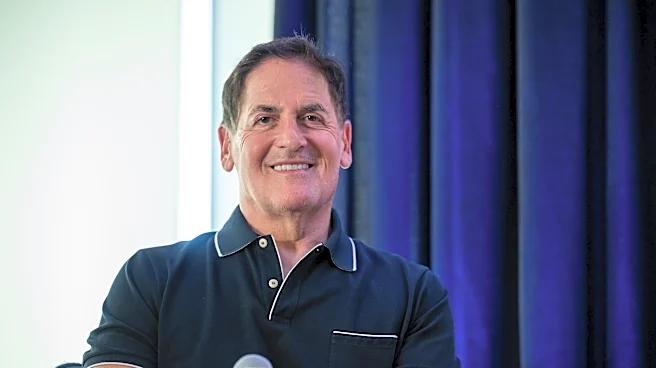
Billionaire entrepreneur Mark Cuban recently offered advice to a struggling restaurant owner regarding the critical decision of when to close a business. During an appearance on Scott Galloway's "The Prof G Pod" on November 16, Cuban stated that business owners
should consider closing when they can no longer afford it mentally or financially. He emphasized that financial strain is an obvious indicator, as running out of money necessitates closure. However, Cuban highlighted that the mental toll can be even more severe, potentially leading to family breakdowns, especially when others depend on the business owner. This advice came in response to a listener whose restaurant, heavily reliant on delivery apps, was experiencing rising sales but still required the owner to cover operating expenses from personal funds. This scenario is common in delivery-heavy kitchens, where commissions from services like DoorDash Inc. can range from 15% to 30% per order, impacting profitability despite increased volume.
Why It's Important?
Cuban's counsel underscores a significant challenge faced by small business owners, particularly in the restaurant industry, where the allure of growth can overshadow the reality of cash flow. His emphasis on prioritizing cash flow over growth is a crucial lesson for entrepreneurs, as he noted that "Nobody ever failed while they were cash flow positive." This perspective is vital for the U.S. small business sector, which forms the backbone of the economy. Many independent operators, especially those utilizing online ordering and delivery platforms, report lower profits despite increased sales, as indicated by the James Beard Foundation's Independent Restaurant Industry Report. This situation can lead to immense personal and financial stress for owners, potentially impacting their families and overall well-being. Cuban's advice provides a pragmatic framework for evaluating business viability, encouraging owners to recognize their breaking point before irreversible damage occurs.
What's Next?
The insights provided by Mark Cuban could influence how struggling small business owners, particularly those in the restaurant sector, assess their operational strategies. His advice to prioritize cash flow and mental well-being might lead more entrepreneurs to critically evaluate their business models, especially concerning reliance on third-party delivery apps and their associated commission fees. This could prompt a re-evaluation of pricing strategies, operational efficiencies, or even a shift towards alternative business models to ensure cash flow positivity. Furthermore, the discussion highlights the need for entrepreneurs to build informal advisory boards, as suggested by Scott Galloway, to receive honest feedback before reaching a crisis point. This proactive approach could help business owners make more informed decisions about the future of their ventures, potentially mitigating severe financial and personal consequences.
Beyond the Headlines
The broader implications of Cuban's advice extend beyond immediate financial decisions, touching upon the psychological and societal aspects of entrepreneurship. The pressure to succeed, coupled with the "never quit" mentality often glorified in business culture, can lead entrepreneurs to endure unsustainable levels of stress and financial hardship. Cuban's candid acknowledgment of the mental strain and its potential to "tear apart a family" challenges this narrative, advocating for a more holistic view of business success that includes personal well-being. This perspective could foster a healthier entrepreneurial ecosystem where founders are encouraged to recognize their limits and make difficult but necessary decisions for their long-term health and the stability of their families. It also sheds light on the structural challenges within industries like food service, where high commission fees from delivery platforms can create a precarious environment for small businesses, prompting a larger conversation about fair business practices and support for independent operators.