







What's Happening?
New Yorker cartoonists Roz Chast and Jason Adam Katzenstein have collaborated on a new graphic memoir titled 'The Two Saddest Kitchens.' The book, presented in words and illustrations, humorously details the shared 'shameful problem' of their dysfunctional
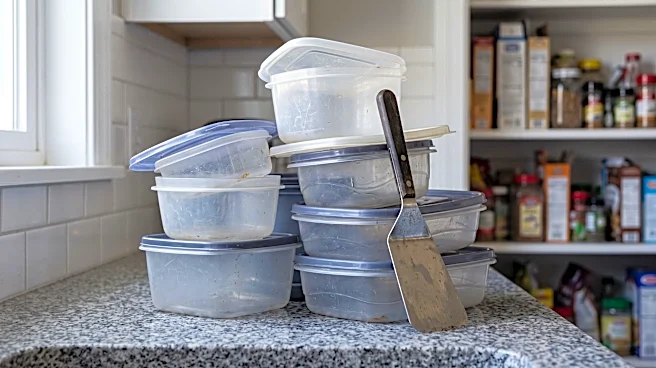
kitchens. During an interview on FRESH AIR, the authors discussed the memoir's themes, which include moldy food, ill-fitting plastic container lids, dysfunctional appliances, and even cockroach infestations. Chapter titles like 'The Under-Sink Cabinet Of Doom' and 'Our Kitchens Are Trying To Kill Us' reflect the book's candid and often self-deprecating tone. Both Chast and Katzenstein admit to not enjoying cooking and describe their kitchens as sources of dread rather than comfort. Katzenstein, who lives alone, and Chast, who has a studio apartment where she rarely uses the stove, share anecdotes about 'scrounging' or 'fending' for meals instead of cooking. The book also touches on personal experiences, with Katzenstein discussing his past struggles with Obsessive Compulsive Disorder (OCD) and Chast sharing her anxieties about driving.
Why It's Important?
This graphic memoir offers a relatable and humorous perspective on a common, yet often unspoken, aspect of modern life: the less-than-perfect domestic space. In an era where idealized kitchens and gourmet cooking are frequently showcased, Chast and Katzenstein's work provides a refreshing counter-narrative, validating the experiences of those who find their kitchens to be sources of stress rather than joy. The book's popularity and the authors' willingness to share their vulnerabilities can foster a sense of community and reduce feelings of inadequacy among readers. Furthermore, the discussion of Katzenstein's OCD and Chast's anxieties highlights the broader connection between mental health and daily living, demonstrating how personal struggles can manifest in seemingly mundane aspects of life. The collaboration between two established New Yorker cartoonists also underscores the power of shared experience and friendship in creative endeavors, offering a unique blend of humor and introspection.
What's Next?
The release of 'The Two Saddest Kitchens' is likely to spark further conversations about domestic realities, mental health, and the role of humor in addressing personal challenges. The book's success could encourage other artists and writers to explore similar themes, contributing to a more diverse and authentic representation of everyday life in popular culture. For Chast and Katzenstein, the collaboration has deepened their friendship and provided a new avenue for their creative expression, suggesting potential for future joint projects. The memoir's candid approach to topics like OCD and anxiety may also contribute to destigmatizing these conditions, encouraging more open dialogue and understanding. Readers might find themselves re-evaluating their own kitchen spaces and domestic habits, perhaps with a newfound sense of humor and self-acceptance, recognizing that perfection is often an unrealistic ideal.
Beyond the Headlines
Beyond its immediate appeal, 'The Two Saddest Kitchens' subtly critiques societal pressures to maintain an immaculate home and embrace a specific lifestyle. The authors' confessions about their kitchens challenge the aspirational imagery often presented in media, offering a more grounded and honest portrayal of domesticity. This work can be seen as a commentary on consumer culture, particularly the emphasis on expensive kitchenware and the expectation of constant culinary engagement. The book's exploration of personal anxieties, such as Chast's driving fears and Katzenstein's OCD, woven into the narrative of kitchen disarray, highlights how internal struggles can permeate and shape our physical environments. It suggests that our homes are not just spaces but reflections of our inner lives, complete with their imperfections and quirks. The memoir's collaborative nature also speaks to the therapeutic power of shared vulnerability and the ability of humor to transform discomfort into connection.