






What's Happening?
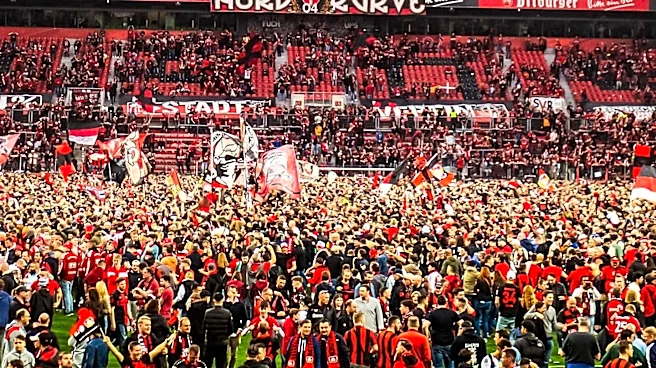
Nordkurve12, an organized supporter group for German football club Bayer Leverkusen, has publicly called for the club to relinquish its long-standing exemption from the Bundesliga's 50+1 ownership rule. This rule typically mandates that a member-controlled
parent club holds majority voting control over its professional football operations. Unlike most Bundesliga clubs, Bayer Leverkusen's professional football company is wholly owned by Bayer AG, a pharmaceutical and chemical company. Nordkurve12 has directly challenged Bayer AG to embrace meaningful fan participation and warned that any legal attempts to defend the club's special ownership status could further jeopardize the future of the 50+1 rule. The club has acknowledged these concerns, stating a willingness to engage with the wider reform process and emphasizing that member participation is important for the further development of 50+1, but has not agreed to relinquish its exemption. This intervention comes amidst renewed pressure from German football's organized supporter groups, with the nationwide Fanszenen Deutschlands alliance demanding the league eliminate existing exemptions and implement recommendations from Germany's Federal Cartel Office.
Why It's Important?
This demand from Nordkurve12 is significant because it represents a rare instance of a supporter group actively campaigning against its own club's privileged ownership structure. The 50+1 rule is a cornerstone of German football, designed to protect clubs from external corporate control and ensure fan influence. If Bayer Leverkusen were to relinquish its exemption, it would align the club more closely with the democratic principles favored by the majority of German football fans and the Federal Cartel Office. This move could set a precedent for other clubs with similar exemptions, such as VfL Wolfsburg, potentially leading to a more uniform application of the 50+1 rule across the Bundesliga. The outcome of these discussions could influence the financial and operational models of German football clubs, potentially shifting power dynamics from corporate entities back towards fan-members, impacting commercial strategies and club governance.
What's Next?
Nordkurve12 reportedly plans to discuss its demands with Bayer Leverkusen's leadership in the coming week. The broader context involves the Bundesliga's December membership assembly, where the 36 Bundesliga and 2. Bundesliga clubs are expected to vote on reaffirming their commitment to the 50+1 ownership principle. Final proposals for a more uniform application of the rule are anticipated in the first half of 2027. Bayer AG has previously indicated it would carefully examine the Federal Cartel Office's assessment and reserved its options for protecting corporate and shareholder interests, while also expressing a desire for a practical, sustainable solution through dialogue. The ongoing pressure from supporter groups and the Federal Cartel Office suggests that the debate over the 50+1 rule and its exemptions will continue to be a central issue in German football governance.
Beyond the Headlines
The debate surrounding Bayer Leverkusen's ownership exemption highlights a fundamental tension within modern football: the balance between commercial interests and fan-centric governance. The 50+1 rule is often seen as a safeguard against the unchecked commercialization of football, preserving club identity and community ties. Should Bayer Leverkusen's exemption be removed, it could reinforce the idea that football clubs are more than just businesses, emphasizing their cultural and social roles. This development could also influence discussions in other European leagues regarding ownership models and fan involvement, potentially inspiring similar movements for greater fan control. The ethical implications of corporate ownership versus member control, and the legal challenges posed by competition authorities, underscore the complex interplay of business, sport, and community values in professional football.