





What's Happening?
The industrial oxygen generators market is experiencing rapid evolution due to technological advancements that enhance efficiency, reliability, and reduce the total cost of ownership. End-users across various sectors, including steelmaking, healthcare,
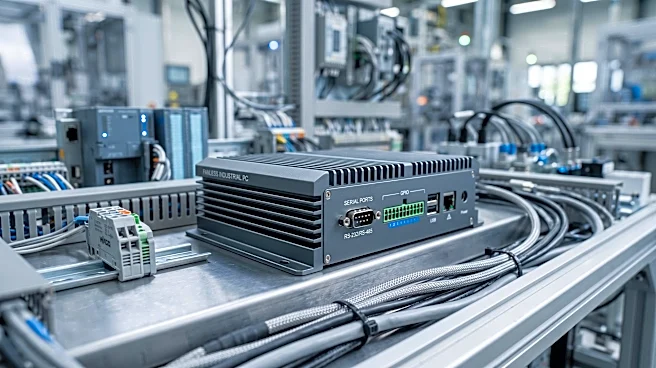
and chemical manufacturing, are increasingly seeking energy-efficient, scalable, and on-site oxygen solutions. Key technological drivers include improvements in membrane design, adsorption materials, and compressor efficiency, which significantly reduce energy consumption. Additionally, advances in sensor technology, online gas analysis, and closed-loop process control ensure precise regulation of oxygen purity and flow. Digitalization, through remote monitoring, predictive maintenance, and Industrial Internet of Things (IIoT) integration, is transforming oxygen generation into intelligent, connected systems, optimizing operations and minimizing downtime.
Why It's Important?
These technological shifts are critical for industries that rely heavily on consistent and high-purity oxygen. Enhanced energy efficiency directly lowers operating costs, making on-site oxygen generation more competitive and often preferable to traditional supply methods. Improved process control and gas purity are vital for applications like combustion optimization, wastewater treatment, and chemical synthesis, where specific oxygen concentrations are crucial for product quality and operational safety. The modular and scalable architectures of new generators allow for phased investments, aligning with plant expansion plans and preserving capital budgets. This evolution impacts capital expenditure, operational costs, and the overall reliability of oxygen supply, influencing procurement decisions and long-term strategic planning for manufacturers and end-users.
What's Next?
The market is expected to see continued emphasis on integrating high-efficiency hardware with advanced analytics, modular designs, and flexible service agreements. Manufacturers that offer performance-based service contracts, guaranteeing purity and uptime, are likely to gain a competitive edge. Hybrid models combining on-site generation with external supply for peak demand are also emerging, offering greater flexibility. Emerging markets, particularly those with growing steel production, chemical manufacturing, and healthcare infrastructure, are anticipated to drive sustained demand for compact, energy-efficient, and scalable oxygen generators. As environmental, health, and safety (EHS) standards become stricter, equipment demonstrating lower emissions and safer operation profiles will be highly valued. Challenges such as upfront capital costs, integration with existing plants, and cybersecurity will need to be addressed.
Beyond the Headlines
The shift towards advanced industrial oxygen generation reflects a broader trend of industrial self-sufficiency and optimization. By enabling on-site generation, industries can reduce their reliance on external supply chains, which can be vulnerable to disruptions and price volatility. This move also aligns with sustainability goals by promoting energy efficiency and potentially reducing the carbon footprint associated with oxygen transportation. The integration of IIoT and predictive maintenance signifies a move towards 'smart factories,' where data-driven insights enhance operational resilience and efficiency. This technological evolution not only impacts the industrial sector but also has implications for public health, particularly in healthcare facilities where a reliable oxygen supply is critical for patient care, especially during emergencies or pandemics.