



What's Happening?
Ben Miller, founder of Zen with Ben and a sound bath educator, advocates for sound bath facilitators to adopt a more musical understanding of their practice. Miller, who has a background in music production, argues that while sound baths are often discussed
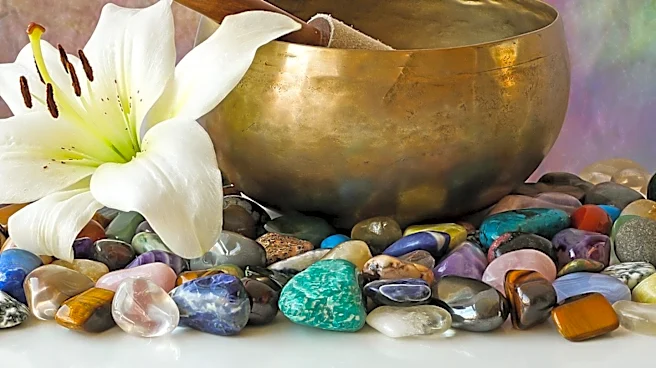
through spiritual and energetic language, they are fundamentally musical experiences. He emphasizes that the instruments used, such as crystal singing bowls, produce pitch, tone, sustain, decay, harmony, tension, and rhythm. Miller's 'Zen with Ben Method' focuses on teaching facilitators how to intentionally work with these musical elements to create more structured and expressive soundscapes. He suggests that understanding musical relationships allows facilitators greater control over the experience they create, moving beyond purely intuitive playing. This approach aims to enhance the quality and impact of sound baths by grounding them in musical principles.
Why It's Important?
This shift in perspective for sound bath facilitation could significantly impact the wellness industry, particularly in the U.S., where sound baths are gaining popularity as a method for stress reduction and relaxation. By encouraging facilitators to understand the musical underpinnings of their practice, the quality and consistency of sound bath experiences could improve. This could lead to more effective sessions for participants seeking deep relaxation, emotional release, and nervous-system recalibration. For practitioners, a deeper musical understanding offers a framework for intentional creation, potentially elevating the professional standards of sound bath facilitation. It also provides a more tangible and less mystical explanation for the therapeutic effects, which might appeal to a broader audience and integrate sound baths more firmly into mainstream wellness practices. This approach could also foster innovation in sound bath design, moving beyond random sound combinations to harmonically rich and structured journeys.
What's Next?
The adoption of Miller's 'Zen with Ben Method' or similar musically-focused training programs could become more prevalent in sound bath education. Facilitators might increasingly seek out training that incorporates music theory, harmony, and intentional sound design, leading to a more standardized and professional approach within the industry. This could result in a new generation of sound bath practitioners who are not only intuitively guided but also musically informed, capable of crafting more sophisticated and impactful experiences. Furthermore, as the understanding of sound baths evolves, there may be a greater emphasis on research into the physiological and psychological effects of specific musical structures and harmonies used in these sessions, potentially leading to evidence-based practices and wider acceptance in therapeutic settings.
Beyond the Headlines
The emphasis on musicality in sound baths touches upon a broader discussion about the intersection of art, science, and spirituality in wellness practices. By framing sound baths as musical compositions, Miller challenges the often-ethereal language surrounding them, suggesting that their profound effects can be understood through the tangible principles of music. This perspective does not diminish the spiritual or healing aspects for participants but rather provides facilitators with a more robust toolkit. It highlights the idea that structure can create freedom, allowing for more intentional and impactful experiences. This approach could also lead to a re-evaluation of how other alternative therapies are taught and practiced, encouraging a blend of intuitive understanding with technical knowledge to enhance efficacy and accessibility.