





What's Happening?
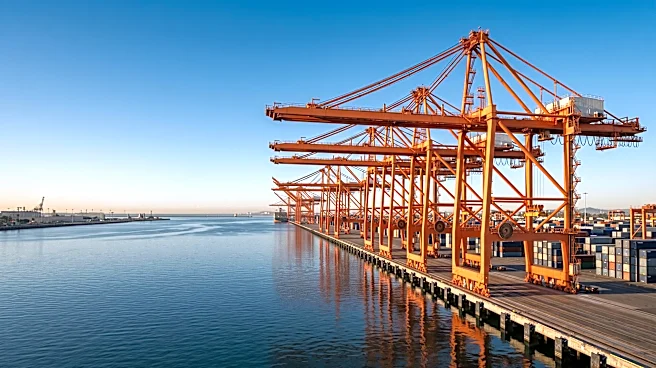
Yusen Terminals Inc. (YTI) has secured a significant 30-year lease extension with the Port of Los Angeles, ensuring its continued operation at Berths 212-223 through 2056. This landmark agreement, approved by the Los Angeles Board of Harbor Commissioners,
includes a substantial commitment from YTI to invest $200 million in zero-emission equipment. Port Executive Director Gene Seroka highlighted this agreement as a prime example of how environmental progress, operational efficiency, and community partnership can advance simultaneously. YTI, a company owned by Ocean Network Express (ONE) with its global headquarters in Singapore, operates as a marine cargo terminal service provider in Terminal Island, Los Angeles. The lease extension solidifies YTI's long-term presence and operational capabilities within one of the busiest ports in the United States.
Why It's Important?
This 30-year lease extension and the associated $200 million investment in zero-emission equipment are critically important for several reasons. Firstly, it demonstrates a strong commitment from both the Port of Los Angeles and YTI towards environmental sustainability, aligning with broader efforts to reduce carbon footprints and improve air quality in port communities. This investment will likely accelerate the adoption of cleaner technologies in the maritime industry, setting a precedent for other ports and terminal operators. Secondly, securing a long-term lease provides stability for YTI's operations, ensuring continued job creation and economic activity in the region for decades. This stability is vital for the U.S. supply chain, as the Port of Los Angeles is a crucial gateway for international trade. Lastly, the agreement underscores the growing trend of integrating environmental goals with economic development, showcasing how large-scale infrastructure projects can be designed to benefit both commerce and the environment, impacting public health and quality of life for residents near port areas.
What's Next?
Following the lease extension, Yusen Terminals Inc. will embark on the phased implementation of its $200 million investment in zero-emission equipment. This will likely involve the procurement and deployment of electric cranes, yard trucks, and other cargo-handling machinery, along with the necessary charging infrastructure. The Port of Los Angeles will closely monitor YTI's progress to ensure compliance with the environmental commitments outlined in the agreement. This initiative could also spur further innovation in green port technologies and encourage other terminal operators within the port and across the nation to adopt similar sustainable practices. There may be public engagement and community outreach efforts to inform local residents about the environmental benefits and operational changes resulting from these investments. Additionally, the success of this partnership could serve as a model for future collaborations between port authorities and private companies, emphasizing environmental stewardship as a core component of long-term operational planning.
Beyond the Headlines
The long-term lease and significant investment in zero-emission technology by Yusen Terminals at the Port of Los Angeles represent more than just a business deal; they signify a pivotal shift in the maritime industry's approach to environmental responsibility. This move could catalyze a broader transformation across the global shipping and logistics sectors, pushing for greater adoption of sustainable practices and technologies. The ethical dimension lies in the recognition that economic growth and environmental protection are not mutually exclusive but rather interdependent. This agreement highlights the increasing pressure on major industrial players to address their ecological impact, driven by both regulatory demands and public expectations. It also underscores the role of large ports as critical nodes for implementing climate action, given their substantial contribution to emissions. The long-term implications could include a healthier workforce, reduced public health burdens in surrounding communities, and a more resilient supply chain less dependent on fossil fuels, ultimately contributing to the U.S.'s broader climate goals and setting a global example for sustainable port operations.