


What's Happening?
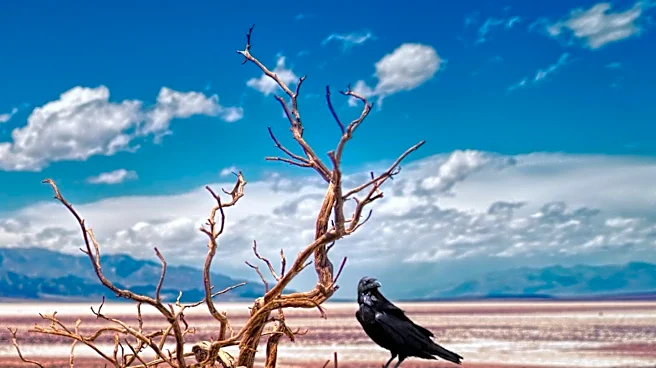
Ravens are consistently portrayed as symbols of 'bad omens' within European folklore, often associated with death, cemeteries, battlefields, and ghosts. This perception extends to their frequent appearance in Halloween displays alongside other macabre
symbols. Despite their complex symbolism across various cultures, including being seen as clever and sacred in some Indigenous traditions, their role as harbingers of misfortune remains prominent in European narratives. The birds' mysterious nature and historical ties to the 'otherworld' contribute to their enduring reputation as ominous figures.
Why It's Important?
The persistent perception of ravens as bad omens in European folklore is important because it reflects a deep-seated cultural understanding and fear of the unknown. This symbolism influences how these birds are viewed in popular culture, literature, and art, often reinforcing their association with negative events or supernatural occurrences. For instance, the belief that the British kingdom would fall if ravens left the Tower of London highlights the profound impact of such folklore on national identity and tradition. This cultural interpretation can shape public perception of wildlife, sometimes leading to misconceptions about the birds themselves, despite their intelligence and ecological significance.
What's Next?
The cultural association of ravens with bad omens is likely to continue influencing their portrayal in media, literature, and seasonal decorations, particularly around Halloween. Efforts by ornithologists and wildlife enthusiasts to educate the public about the true nature and intelligence of ravens may gradually shift some perceptions, but the deeply ingrained folklore will likely persist. The ongoing fascination with their mysterious qualities will ensure their continued presence in stories and traditions that explore themes of death, prophecy, and the supernatural, maintaining their dual role as both feared omens and intriguing creatures.
Beyond the Headlines
The enduring symbolism of ravens as bad omens delves into the psychological and anthropological aspects of human interaction with the natural world. It reflects how cultures assign meaning to animals based on their behaviors, appearances, and historical contexts. The raven's intelligence, dark plumage, and scavenging habits likely contributed to its association with death and the unseen. This cultural phenomenon highlights the power of folklore to shape collective consciousness and influence perceptions for centuries, even in modern societies. It also underscores the tension between scientific understanding of animal behavior and the rich, often mystical, interpretations embedded in human tradition.