






What's Happening?
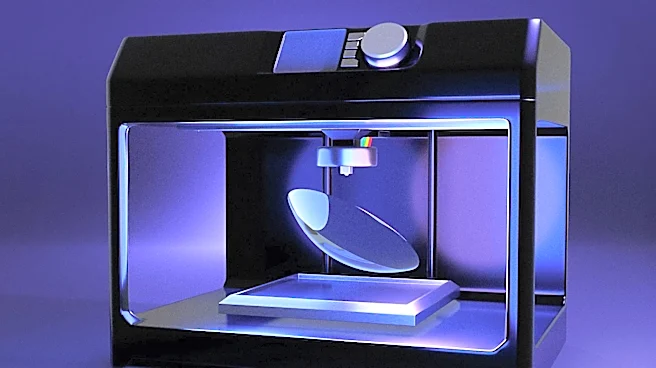
Georgia-Pacific, a leading global manufacturer of tissue, pulp, packaging, building products, and related chemicals, is leveraging onsite 3D printing across its facilities to innovate, reduce costs, and improve safety. This initiative is driven by a bottom-up
approach, with employees on the plant floor identifying opportunities and designing solutions. For instance, at its Muskogee, Oklahoma, and Brewton, Alabama facilities, 3D printing has become an internal resource for producing items that are typically costly, time-consuming, or difficult to source through traditional supply chains. Engineers and maintenance teams are designing and manufacturing small parts and protective solutions tailored to specific operational needs. This method replaces long lead times and process frustrations with on-demand production. An example includes 3D printing small tabs for junction boxes on Laser Guided Vehicles (LGVs), significantly reducing replacement costs and downtime. Another application involves creating custom mounts for turnstile cameras and protective cages for drones, ensuring safer operations in confined spaces. The company employs over 30,000 people at approximately 300 locations in North and South America.
Why It's Important?
The adoption of onsite 3D printing by Georgia-Pacific signifies a crucial shift in manufacturing practices, offering substantial benefits to U.S. industries. By enabling rapid prototyping and on-demand production of specialized parts, the company can drastically cut down on procurement costs and lead times, which are often significant challenges in large-scale manufacturing. This approach enhances operational efficiency by minimizing downtime, as evidenced by the ability to print a small replacement part instead of ordering an entire new assembly. Furthermore, the focus on creating custom protective solutions, such as drone cages, directly contributes to improved workplace safety, a critical concern across all industrial sectors. This internal innovation model empowers employees, fostering a culture of problem-solving and continuous improvement from the plant floor up. The success of this strategy could serve as a blueprint for other U.S. manufacturers looking to optimize their supply chains, reduce operational expenditures, and boost safety standards through advanced manufacturing technologies.
What's Next?
Georgia-Pacific is expected to continue expanding its onsite 3D printing capabilities, integrating this technology into more of its approximately 300 locations across North and South America. The company's bottom-up approach, which encourages plant-floor employees to identify and solve problems using 3D printing, suggests a sustained focus on localized innovation. This could lead to the development of a wider array of custom parts and safety solutions, further reducing reliance on external suppliers for specialized components. Other manufacturing companies in the U.S. may observe Georgia-Pacific's success and consider adopting similar strategies to enhance their own operational efficiencies and safety protocols. The ongoing integration of 3D printing is likely to result in continuous improvements in cost reduction, lead time optimization, and worker safety across Georgia-Pacific's diverse product lines, including tissue, pulp, packaging, and building materials.
Beyond the Headlines
The strategic implementation of onsite 3D printing by Georgia-Pacific extends beyond immediate cost savings and efficiency gains, pointing to broader implications for the manufacturing sector. This approach fosters a culture of 'creative destruction' within the company, where traditional, slower, and more expensive methods are actively replaced by innovative, in-house solutions. Ethically, empowering plant-floor employees like drafter Nate Yarbrough and maintenance lead Kyle Null to design and produce solutions directly addresses their immediate needs, enhancing job satisfaction and ownership. Legally, the ability to produce custom parts on-demand could reduce intellectual property risks associated with outsourcing specialized components. Culturally, it promotes a decentralized innovation model, shifting problem-solving capabilities closer to the point of need. This could lead to a long-term shift in manufacturing, where companies prioritize internal technological adoption and employee-driven innovation to maintain competitiveness and adaptability in a rapidly evolving industrial landscape.