





What's Happening?
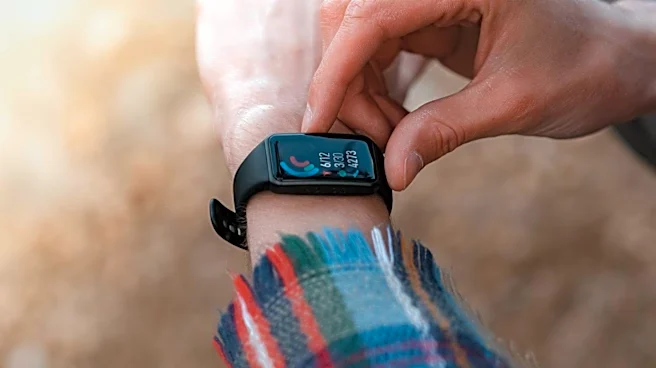
The fitness tracker market is expanding beyond basic step counting to offer sophisticated health monitoring, with devices now tracking sleep, recovery, stress, and heart rate variability. Key players like Oura, WHOOP, and COROS PACE 4 are highlighted
for their specialized features. Oura is favored for cycle tracking and fertility, integrating with apps like Natural Cycles and Flo, and monitoring women's health metrics. WHOOP focuses on training load and recovery, allowing users to log cycle phases. The COROS PACE 4 also includes menstrual cycle tracking. For men, WHOOP and COROS watches are recommended for in-depth training load and recovery insights. The market also sees deals on devices like the Garmin Vívosmart 5 and Fitbit Charge 6, with Garmin offering extended battery life and Fitbit providing a lightweight design. Experts emphasize choosing a tracker based on individual goals and comfort, as a device left unused provides no data. The accuracy of these devices is considered sufficient for personal baselines, though not for clinical diagnosis.
Why It's Important?
The evolution of fitness trackers signifies a growing trend in personalized health management, impacting how individuals approach their well-being and training. For the health and wellness industry, this means a shift towards more data-driven and specialized products, creating new market segments for women's health, athletic performance, and stress management. Consumers stand to gain from more tailored insights into their bodies, potentially leading to improved health habits and optimized training routines. However, the reliance on these devices also introduces considerations around data privacy and the potential for 'orthosomnia'—an unhealthy preoccupation with perfect health scores. Businesses in the wearable technology sector must balance innovation with ethical data handling and clear communication about device limitations. The increasing integration of these trackers with health apps also points to a future where personal health data plays a more central role in preventative care and lifestyle choices, influencing insurance models and healthcare provider interactions.
What's Next?
The fitness tracker market is expected to continue its trajectory towards greater specialization and integration with broader health ecosystems. Future developments may include enhanced AI-driven insights, more seamless integration with medical professionals for preventative care, and further advancements in non-invasive monitoring technologies. Companies will likely focus on improving the accuracy of metrics like sleep stages and calorie burn, which currently have limitations compared to clinical standards. There will also be an ongoing emphasis on user comfort and battery life to ensure consistent wear. As these devices become more ubiquitous, regulatory bodies may increase scrutiny on data privacy and the medical claims made by manufacturers. The trend towards subscription-based models for advanced features, as seen with Oura and WHOOP, is also likely to expand, creating recurring revenue streams for companies while offering users continuous access to updated analytics and personalized coaching.
Beyond the Headlines
Beyond the immediate benefits of tracking physical activity, the rise of advanced fitness trackers touches upon deeper societal and psychological implications. The constant availability of personal health data can foster a heightened sense of self-awareness, but it also risks creating anxiety or an unhealthy obsession with numbers, as highlighted by the concept of orthosomnia. This raises ethical questions about the psychological impact of continuous self-monitoring and the potential for data to dictate behavior rather than merely inform it. Legally, the collection of sensitive health data by these devices presents challenges regarding data ownership, security, and potential misuse, especially as this data becomes more valuable to advertisers and insurance companies. Culturally, these trackers are transforming our relationship with our bodies, shifting from intuitive understanding to data-driven optimization. This could lead to a future where personal health is increasingly quantified and managed through technology, potentially altering our perceptions of health, illness, and personal responsibility.