








What's Happening?
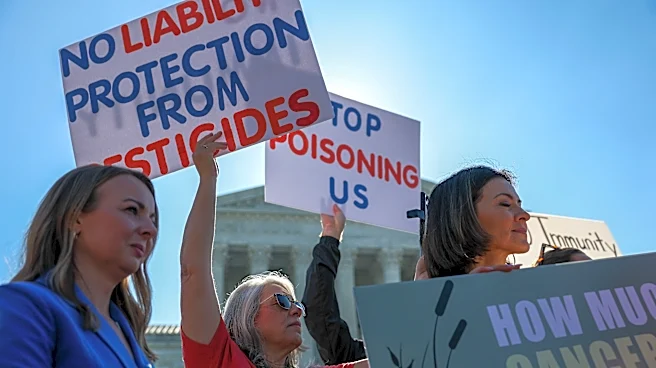
Bayer has secured a significant legal victory as the Supreme Court ruled to block thousands of lawsuits against the company regarding its Roundup weedkiller. This decision comes amidst ongoing debates over the safety of glyphosate, the active ingredient
in Roundup, which has been the subject of numerous health-related lawsuits. The ruling effectively prevents further legal actions from proceeding, providing Bayer with a reprieve from the extensive litigation it has faced. This development is part of a broader roundup of significant events in the agtech and foodtech sectors, including mergers, acquisitions, and funding rounds. Notably, the Supreme Court's decision is a pivotal moment for Bayer, which has been embroiled in legal battles over Roundup for years.
Why It's Important?
The Supreme Court's decision to block lawsuits against Bayer is a critical development for the company and the agricultural industry at large. By halting these legal challenges, Bayer can potentially avoid billions in liabilities, stabilizing its financial outlook and allowing it to focus on its core business operations. This ruling may also influence future regulatory and legal approaches to agricultural chemicals, impacting how companies manage product safety and litigation risks. For the agricultural sector, this decision underscores the importance of regulatory compliance and the potential financial implications of product safety disputes. Stakeholders, including farmers and agricultural businesses, may view this as a precedent-setting case that could affect future litigation and regulatory policies.
What's Next?
Following the Supreme Court's ruling, Bayer is likely to focus on rebuilding its public image and addressing any remaining concerns about Roundup's safety. The company may also engage in further research and development to enhance product safety and compliance with regulatory standards. Additionally, this decision could prompt other companies in the agricultural sector to reassess their legal strategies and product safety measures. Regulatory bodies might also review their guidelines and enforcement practices in light of this ruling, potentially leading to new regulations or amendments to existing ones. Stakeholders will be closely monitoring Bayer's next steps and any potential shifts in the regulatory landscape.