




What's Happening?
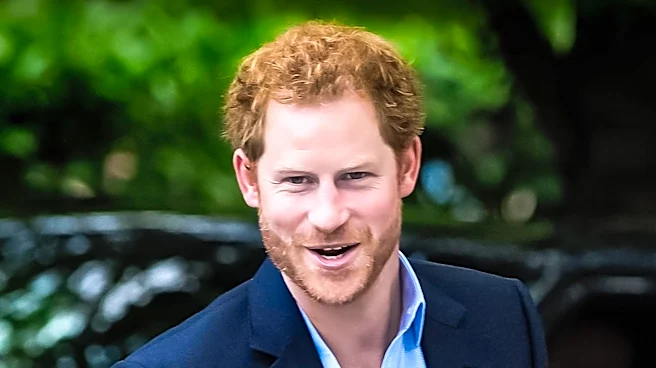
Prince Harry has recently appeared on two sports-themed podcasts, marking a shift towards a lighter media presence similar to that of his brother, Prince William. Harry joined James Corden on Fox's After Hours to discuss soccer following the World Cup
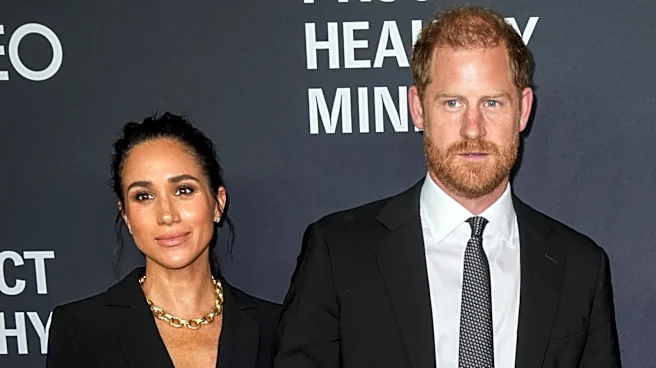
Final, and also appeared on Joe Marler Will See You Now, promoting his Invictus Games. These appearances allowed Harry to showcase a more relaxed and humorous side, contrasting with his previous media engagements that often focused on serious topics like mental health and family disputes. This approach mirrors Prince William's long-standing use of podcasts to present a more approachable image, particularly through his involvement with sports-related content.
Why It's Important?
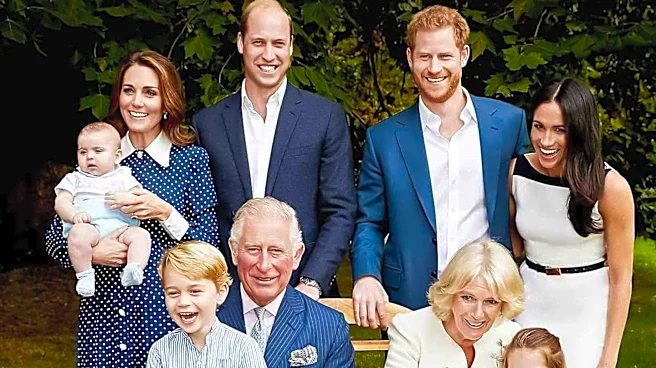
This development is significant as it highlights a potential shift in Prince Harry's public relations strategy, possibly aiming to soften his image in the media. By engaging in sports podcasts, Harry aligns himself with a format that has been successful for Prince William, who has used such platforms to maintain a positive public persona. This move could help Harry reconnect with audiences who may have been alienated by his previous, more contentious media appearances. It also underscores the ongoing competitive dynamic between the two brothers, as they navigate their public roles and media strategies independently.
What's Next?
Prince Harry's foray into sports podcasts may lead to further engagements in similar formats, potentially broadening his appeal and media presence. This could also influence his future projects, possibly integrating more sports-related content into his public endeavors. Observers will be keen to see if this strategy helps mend his public image and whether it affects his relationship with the royal family, particularly with Prince William. The success of these appearances might encourage Harry to explore other media opportunities that allow for a more personal and less formal interaction with the public.
Beyond the Headlines
The choice to engage in sports podcasts may also reflect a deeper cultural shift in how public figures manage their image and connect with audiences. By choosing a medium that is conversational and accessible, Harry is tapping into a growing trend where authenticity and relatability are highly valued by the public. This approach could set a precedent for other public figures seeking to revamp their image or reach new demographics. Additionally, it highlights the evolving nature of media consumption, where traditional interviews are increasingly supplemented by more informal and engaging formats.