



What's Happening?
The beauty industry is shifting its focus from traditional 'anti-aging' rhetoric to a new concept termed 'longevity beauty' or 'biohacking.' This evolution involves a more sophisticated vocabulary, emphasizing 'skin longevity,' 'slow aging,' 'cellular
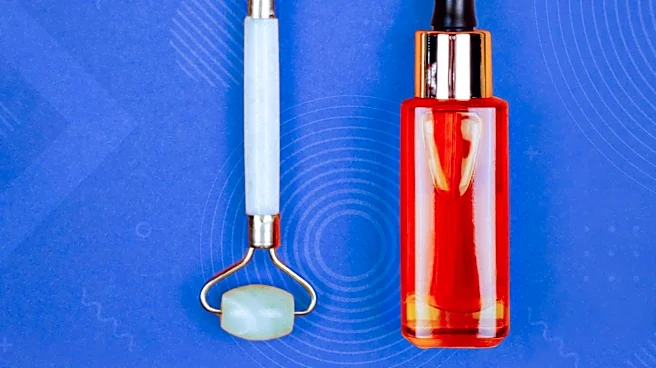
rejuvenation,' and 'mitochondrial health.' Instead of promising to reverse age, the industry now suggests optimizing the aging process through various products and treatments. This includes a wider range of offerings such as advanced skincare ingredients like peptides and growth factors, LED devices, supplements, and aesthetic medical procedures. The change reflects a growing consumer interest in overall wellness and preventative care, particularly in regions like Asia-Pacific, where 'slow aging' concepts are gaining traction among younger generations. The market for beauty and wellness is expanding, with significant growth in online sales and a convergence of skincare with broader wellness and longevity practices.
Why It's Important?
This rebranding signifies a major strategic shift within the beauty industry, moving beyond superficial cosmetic fixes to a more holistic, science-backed approach. For consumers, it means a potential for healthier skin and better well-being over a longer lifetime, aligning with a growing desire for preventative health measures. However, it also carries the risk of turning natural aging into another metric for constant optimization, potentially creating new psychological pressures. The industry's adoption of medical terminology and technology blurs the lines between cosmetics and regulated medical treatments, raising questions about scientific validity versus marketing claims. This trend could lead to increased investment in research and development for genuine longevity solutions, but also necessitates greater consumer scrutiny to differentiate compelling science from persuasive marketing, especially concerning ingredients like exosomes that lack universal clinical validation from bodies like the U.S. Food and Drug Administration.
What's Next?
The beauty industry is expected to continue integrating scientific and medical concepts into its product development and marketing strategies. Consumers will likely see an increase in products and services that claim to optimize biological processes related to aging, such as cellular repair and regeneration. Regulatory bodies, including the U.S. Food and Drug Administration, may face increased pressure to clarify guidelines and enforce standards for products that use medical-sounding claims but are marketed as cosmetics. There will be a continued emphasis on personalized wellness routines that combine skincare, supplements, and aesthetic treatments. The industry will also need to address the ethical implications of promoting 'optimized aging' to ensure it genuinely supports health and well-being rather than fostering new insecurities or unrealistic expectations among consumers.
Beyond the Headlines
The shift to 'longevity beauty' and 'biohacking' reflects a deeper cultural trend where individuals are increasingly seeking control over their biological processes and health outcomes. This movement extends beyond physical appearance to encompass mental and physical performance, driven by a desire for extended vitality and quality of life. However, it also highlights a potential societal challenge: the commodification of every biological process. If aging becomes a performance metric, it could exacerbate anxieties about natural bodily changes and create a new form of pressure to 'age correctly.' This raises ethical questions about the pursuit of perpetual youth and the potential for widening disparities in access to advanced longevity treatments. The blurring of lines between beauty, wellness, and medicine also underscores the need for critical evaluation of scientific claims and a balanced perspective on what constitutes healthy aging.