






What's Happening?
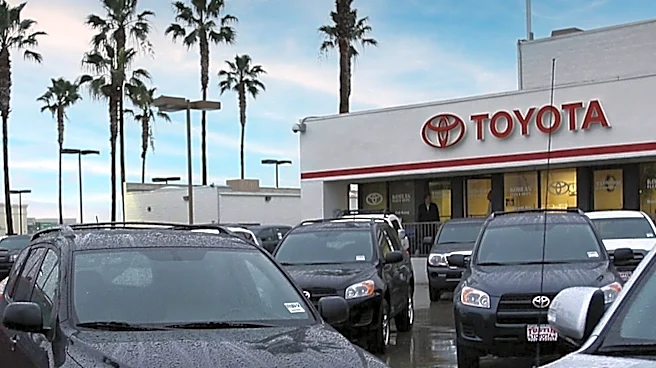
A Toyota dealership in suburban Boston has filed a lawsuit against two former service employees and its former exclusive auto body contractor. The lawsuit alleges that the former employees conspired with the contractor to exploit a customer support program
designed to fix vehicle paint problems. According to the dealership, Toyota of Watertown, the defendants improperly accessed the dealership’s computer system and submitted over $2 million in fraudulent claims for vehicles that were not eligible for financial reimbursement. This alleged scheme represents a significant financial loss for the dealership and a breach of trust.
Why It's Important?
This lawsuit highlights critical issues within the U.S. automotive retail industry, particularly concerning fraud, employee integrity, and the vulnerabilities of customer support programs. For dealerships nationwide, this case serves as a stark warning about the importance of robust internal controls, employee oversight, and secure computer systems to prevent fraudulent activities. The alleged $2 million loss underscores the substantial financial risks associated with such schemes. For consumers, it raises concerns about the potential for abuse within warranty and customer support programs, which could ultimately impact the availability or terms of such benefits. The outcome of this lawsuit could influence how dealerships manage their service departments and interact with third-party contractors.
What's Next?
The lawsuit will proceed through the legal system, likely involving discovery, depositions, and potentially a trial, unless a settlement is reached. Toyota of Watertown will seek to recover the alleged $2 million in fraudulent claims and may pursue additional damages. The former employees and contractor will need to defend themselves against these serious allegations. This case could lead to increased scrutiny of customer support programs across the automotive industry, prompting manufacturers and dealerships to review and strengthen their fraud detection and prevention measures. It may also result in stricter policies regarding employee access to sensitive systems and third-party contractor agreements.
Beyond the Headlines
Beyond the immediate legal and financial aspects, this case touches upon the ethical fabric of business operations and the challenges of maintaining trust in complex commercial relationships. The alleged conspiracy between former employees and a contractor points to a breakdown in internal controls and potentially a culture that allowed such activities to flourish. This incident could spark broader discussions within the automotive retail sector about fostering a strong ethical environment, implementing advanced cybersecurity measures to protect sensitive data, and the importance of due diligence when engaging with external partners. It also highlights the ongoing battle against white-collar crime and the need for vigilance in safeguarding business assets and customer trust.