




What's Happening?
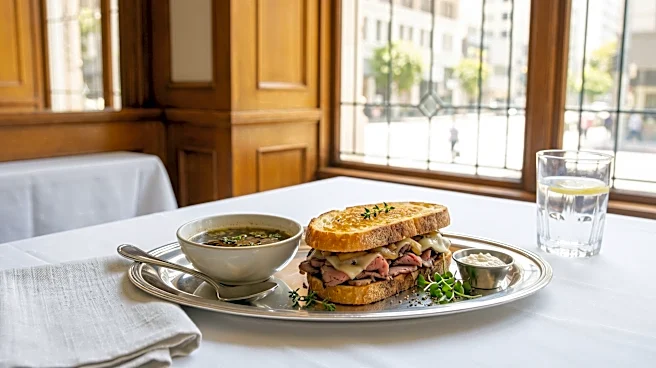
Two iconic Los Angeles restaurants, Cole’s and The Original Pantry Cafe, have reopened after recent closures, offering a glimmer of hope amidst a wave of restaurant shutdowns in the city. Cole’s, a 118-year-old establishment known for its French dip sandwiches,
reopened under new ownership with a refreshed interior featuring white tablecloths and new menu items, while retaining its classic French dips. The Original Pantry Cafe, founded in 1924, also reopened after closing in March 2025 due to pandemic hardships and a labor dispute. Its operation has been taken over by the San Fernando Valley-based nonprofit Hope the Mission, which aims to make everything in-house and use proceeds to benefit its programs. Both restaurants have faced some criticism from long-time patrons regarding changes, but their reopenings are seen as significant developments for downtown L.A.
Why It's Important?
The reopening of Cole’s and The Original Pantry Cafe is significant for the Los Angeles culinary scene, which has been grappling with numerous closures. These establishments represent more than just dining spots; they are cultural landmarks deeply embedded in the city's history and identity. Their return, especially with new operational models—Cole’s under private ownership and The Original Pantry Cafe under a nonprofit—demonstrates innovative approaches to preserving beloved institutions. This trend could inspire other struggling historic businesses to explore alternative ownership and operational strategies to ensure their survival. The public's mixed reactions to changes, however, highlight the challenge of balancing modernization with the preservation of nostalgic elements that patrons cherish.
What's Next?
Both restaurants will continue to operate under their new structures, with Cole’s offering its classic French dips alongside new menu additions, and The Original Pantry Cafe focusing on in-house production and supporting Hope the Mission's programs. The success of these new models will be closely watched as indicators of resilience in the challenging restaurant industry. The ongoing public debate over changes versus tradition will likely persist, influencing how these establishments evolve. Their reopenings contribute to a broader narrative of downtown L.A.'s revitalization efforts, alongside other developments like the cleaning of the Graffiti Towers and the Convention Center expansion, though experts caution against viewing them as a definitive bellwether for the entire city's comeback.
Beyond the Headlines
The narrative surrounding the reopenings of Cole’s and The Original Pantry Cafe delves into the deeper cultural significance of historic eateries in American cities. These establishments often serve as living museums, embodying generations of memories and traditions. Their closures and subsequent reopenings spark conversations about urban development, gentrification, and the delicate balance between preserving heritage and adapting to modern economic realities. The involvement of a nonprofit in The Original Pantry Cafe's revival introduces an interesting social enterprise model, suggesting that community-focused initiatives can play a vital role in sustaining cultural landmarks. This also raises questions about consumer loyalty and the emotional attachment patrons have to places that define their personal and collective histories, often leading to resistance against any perceived alterations to their cherished experiences.