






What's Happening?
Bristol Myers Squibb (BMS) has ended its alliance with Cellares, citing that Cellares' Cell Shuttle system failed to meet the necessary requirements for commercial production of BMS's CAR T-cell immunotherapy, Breyanzi. This decision has directly resulted
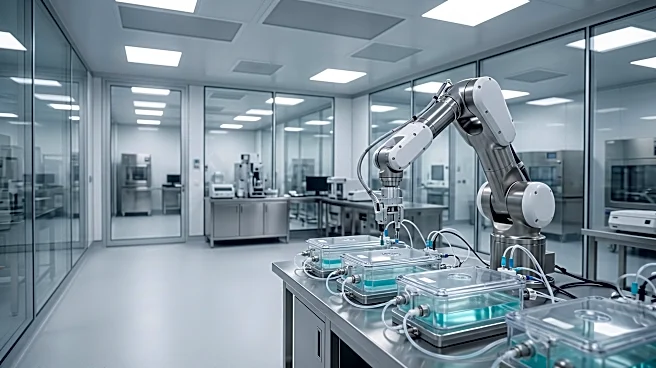
in Cellares planning to lay off approximately 100 employees, with the permanent elimination of these positions scheduled for October 20. The layoffs affect a wide range of roles, including senior positions in engineering, marketing, recruitment, and software. The partnership, initially established in 2024 with a $380 million global capacity reservation and supply agreement, aimed to utilize Cellares' automated platform for end-to-end CAR-T cell therapy production. Cellares, however, strongly disagrees with BMS's characterization of its system, stating that the Cell Shuttle has successfully manufactured GMP drug product for an FDA-regulated clinical program, with doses meeting all specifications and administered to patients.
Why It's Important?
This termination highlights the significant challenges and stringent requirements within the advanced cell therapy manufacturing sector. For BMS, ensuring the reliability and scalability of its Breyanzi production is critical, as it is an FDA-approved CAR-T cell therapy. Any perceived shortcomings in manufacturing capabilities could impact patient access and market supply. For Cellares, the loss of a major partnership with a pharmaceutical giant like BMS, especially after raising $257 million to scale commercial production, represents a substantial setback. The resulting layoffs underscore the financial and operational vulnerabilities of biotech companies heavily reliant on such collaborations. The dispute also raises questions about the evaluation processes for manufacturing platforms in the biopharmaceutical industry and the potential for differing interpretations of system capabilities and regulatory compliance.
What's Next?
Cellares is proceeding with the planned layoffs of approximately 100 employees, effective October 20. The company will likely need to reassess its commercialization strategy and seek new partnerships to offset the loss of the BMS contract. Cellares' assertion that its Cell Shuttle system has successfully produced GMP drug product for clinical programs suggests it may continue to pursue other clients or applications for its technology. For BMS, the focus will remain on its internal and existing external manufacturing sites, such as Oxford BioMedica, to ensure the consistent and compliant production of Breyanzi. The broader cell therapy manufacturing industry may also scrutinize this event, potentially leading to more rigorous due diligence in future partnerships and a re-evaluation of automated platform capabilities.
Beyond the Headlines
The incident touches upon the inherent risks and complexities in the rapidly evolving field of cell and gene therapy manufacturing. The high stakes involved in producing life-saving treatments mean that any manufacturing deviation or perceived inadequacy can have significant consequences, both for patient outcomes and for the financial viability of companies. The differing accounts from BMS and Cellares regarding the Cell Shuttle's capabilities also highlight the potential for technical and contractual disagreements in highly specialized and innovative sectors. This situation could lead to increased scrutiny from regulatory bodies like the FDA regarding the validation and scalability of novel manufacturing technologies, potentially influencing future guidelines and industry standards for cell therapy production.