








What's Happening?
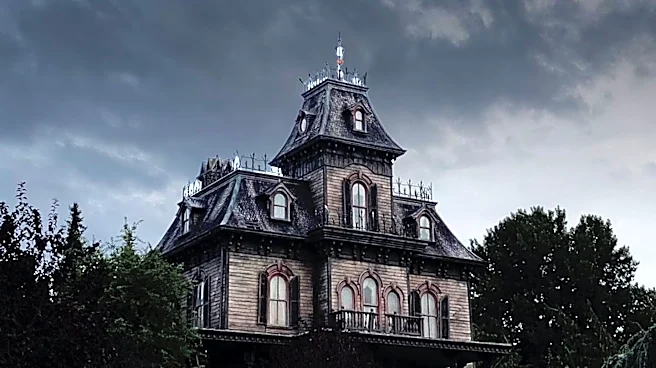
Ed and Lorraine Warren, renowned American paranormal investigators and authors, gained fame for their involvement in high-profile cases such as the Amityville Horror and the Annabelle doll. The Warrens were among the initial investigators of the Amityville house,
where they reported evidence of demonic activity. This case remains a significant part of their legacy, despite ongoing skepticism. The Annabelle doll, a standard Raggedy Ann-style toy from the 1930s, became central to their investigations, with Lorraine Warren asserting for decades that it was inhabited by the spirit of a deceased nun named 'Annabelle.' This narrative was widely popularized through Gerald Brittle's 1977 book, 'The Demonologist,' and later through the 'Annabelle' film series, which began in 2014. However, there is no documented evidence to support claims that the doll was crafted by a Spanish monk or contained occult materials. Skeptics and former museum employees have offered conflicting testimonies, with some describing the doll as harmless and others recounting eerie experiences. Scientific investigations and controlled tests have largely failed to corroborate paranormal assertions, suggesting that phenomena attributed to the doll could be explained by psychological factors like suggestion, the ideomotor effect, and confirmation bias.
Why It's Important?
The enduring public fascination with Ed and Lorraine Warren's cases, particularly the Annabelle doll, highlights the complex interplay between folklore, media, and public perception in the U.S. The commercial success of books and films based on their investigations, such as 'The Conjuring' franchise, demonstrates a significant market for supernatural narratives. This phenomenon impacts the entertainment industry, driving the production of horror content that often blurs the lines between alleged true stories and fictionalized accounts. The Warrens' narrative has also influenced cultural discussions around paranormal phenomena, contributing to a broader acceptance or at least curiosity about such topics among the general public. However, the lack of scientific corroboration for their claims raises questions about journalistic integrity and critical thinking in media consumption. The economic incentives behind maintaining these narratives, including museum admissions and merchandise sales, underscore how belief in the supernatural can be monetized, influencing how these stories are presented and perpetuated.
What's Next?
The legacy of Ed and Lorraine Warren is likely to continue influencing popular culture, with ongoing interest in their cases fueling future adaptations in film, television, and literature. The success of existing franchises suggests that new projects exploring their investigations or similar paranormal themes will continue to emerge. Debates surrounding the authenticity of their claims are also expected to persist, with skeptics continuing to challenge the supernatural explanations and proponents maintaining belief in their experiences. This ongoing dialogue will likely contribute to further academic and public discourse on paranormal research, the psychology of belief, and the ethics of presenting unverified claims as factual. The commercial viability of these stories ensures that the 'Annabelle' doll and other Warren-associated cases will remain cultural touchstones, continually reinterpreted and reintroduced to new audiences.
Beyond the Headlines
The phenomenon surrounding Ed and Lorraine Warren's investigations delves into deeper societal implications concerning belief systems, the power of storytelling, and the human desire to understand the unknown. The widespread acceptance of their narratives, despite scientific skepticism, reflects a cultural inclination towards the mysterious and the supernatural. This can be seen as a form of modern folklore, where stories evolve and adapt to contemporary fears and interests. The ethical dimension arises in how these stories are presented to the public, particularly when commercial interests are involved. The blurring of lines between entertainment and factual reporting can impact critical thinking skills and the ability to discern verifiable information from sensationalized accounts. Furthermore, the Warrens' work touches upon the psychological aspects of fear, suggestion, and collective belief, illustrating how shared narratives can shape individual and communal perceptions of reality, even in the absence of empirical evidence.