


What's Happening?
The Minnesota Twins are preparing for a 2027 season that will heavily rely on their young talent, particularly in the outfield. The team is considering increasing its payroll to bolster its pitching staff, but the focus for offensive improvements is shifting
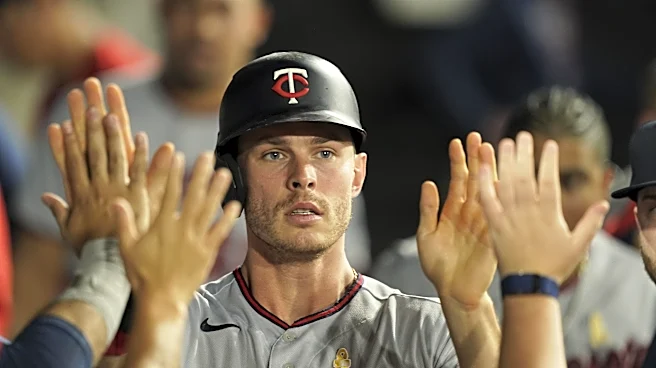
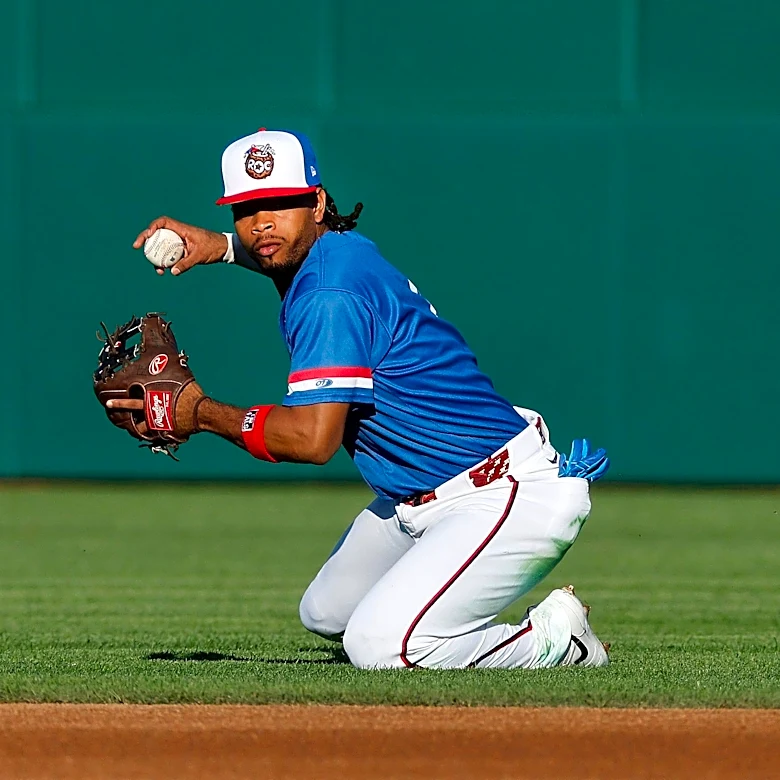
towards developing prospects. This strategy aims to create a more dynamic lineup and enhance defensive capabilities, a point of discussion among Twins' management after the previous season. Towards the end of August, the Twins initiated a call-up of prospects, with Walker Jenkins being the first, followed by Emmanuel Rodriguez a few weeks later. These young players gained valuable experience at the MLB level, adjusting to the demands of big-league play even as the team's postseason hopes dwindled. Jenkins recorded 93 plate appearances, achieving a 92 wRC+ with four home runs and 10 RBIs, showing significant improvement late in his stint. Rodriguez, in 48 plate appearances, hit a home run in his debut but posted a 69 wRC+ with two home runs and five RBIs over 13 games.
Why It's Important?
This strategic shift by the Minnesota Twins to prioritize young outfield prospects like Walker Jenkins and Emmanuel Rodriguez signals a significant organizational commitment to player development over immediate free-agent acquisitions for offensive roles. This approach could lead to a more cost-effective and sustainable team build, potentially freeing up resources for other areas, such as pitching, where the team plans to increase its payroll. For the players, it represents a crucial opportunity to establish themselves at the major league level, with Jenkins, as the Twins' top prospect, expected to secure an Opening Day spot if healthy. The success of this youth movement could redefine the team's competitive window and fan engagement, as a homegrown core often resonates strongly with supporters. Conversely, if these prospects do not perform as expected, the team might face challenges in offensive production, potentially impacting their competitiveness in the American League. The decision also reflects a broader trend in MLB where teams balance veteran experience with the potential of emerging talent.
What's Next?
The immediate next step for the Minnesota Twins will be to integrate Walker Jenkins and Emmanuel Rodriguez fully into their major league plans for the upcoming season. Jenkins is anticipated to earn an Opening Day roster spot, provided he remains healthy, and will be given a significant opportunity to perform. Rodriguez is expected to receive similar treatment, with the team offering him a chance to prove himself at the MLB level. Should either player struggle, the option to re-assign them to the minor leagues remains available. The Twins' front office will likely continue to monitor the development of these young outfielders closely throughout spring training and the early part of the season. Their performance will influence future roster decisions and potentially dictate the team's approach to the trade deadline. This focus on internal talent development also suggests that the Twins will be more active in the free-agent market for pitching improvements rather than offensive upgrades, given the perceived weakness of the offensive free-agent class.
Beyond the Headlines
The Minnesota Twins' pivot towards a youth-centric outfield strategy carries deeper implications beyond immediate roster construction. It reflects a philosophical shift within the organization, emphasizing long-term sustainability and homegrown talent development. This approach can foster a stronger team identity and potentially create a more cohesive clubhouse culture as players grow together through the system. Ethically, it underscores a commitment to investing in and nurturing young athletes, providing them with opportunities to reach their full potential at the highest level of the sport. Economically, relying on prospects can be a more financially prudent strategy compared to bidding for high-priced free agents, allowing for greater flexibility in other areas of team building. However, it also places significant pressure on the scouting and player development departments to accurately identify and cultivate talent. The success or failure of this strategy could influence how other MLB franchises approach their own roster management, potentially leading to a broader league-wide trend towards prioritizing internal development over external acquisitions for offensive positions.