





What's Happening?
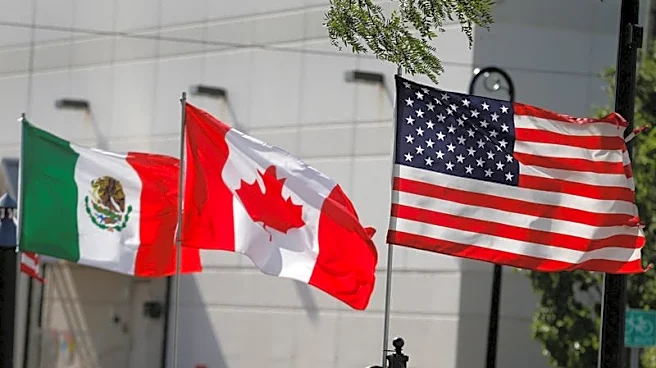
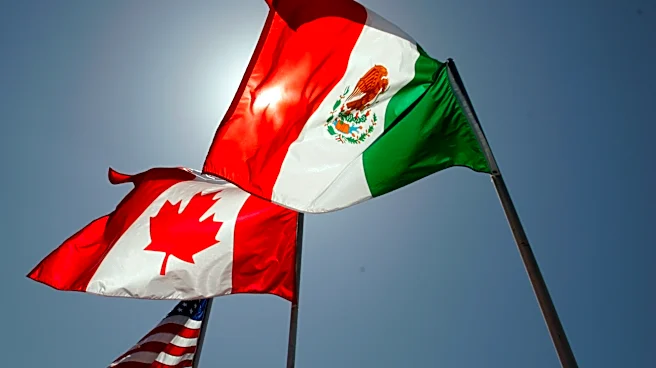
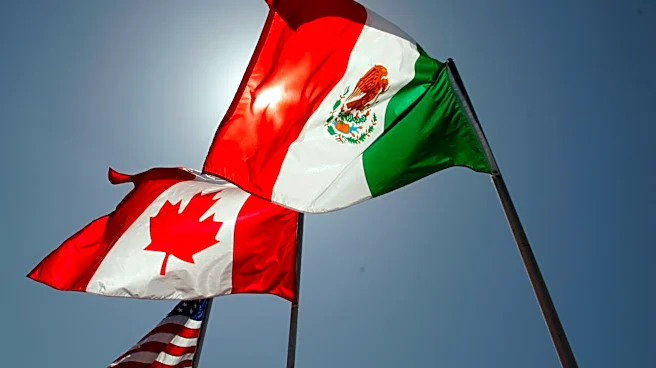
A recent Reuters poll indicates that the Canadian dollar is expected to strengthen less than previously anticipated over the next year. This adjustment is attributed to uncertainties surrounding the U.S.-Mexico-Canada Agreement (USMCA) and its impact
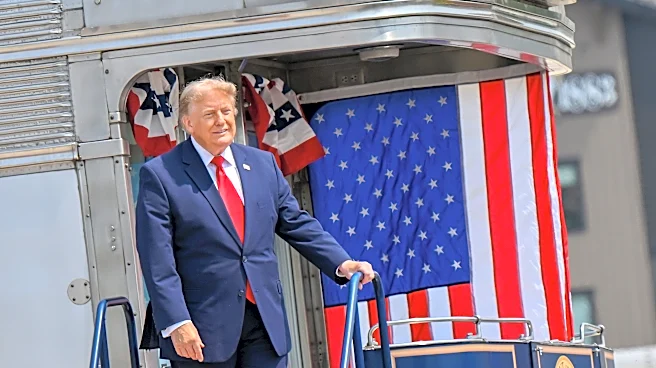
on Canada's economy. The Trump administration's decision not to extend the USMCA has initiated a decade-long process to potentially revise the trade deal, aiming to reshore manufacturing jobs and reduce U.S. trade deficits. This uncertainty has led to a reduction in the likelihood of interest rate hikes by the Bank of Canada. The Canadian dollar, which recently hit a 14-month low, is forecasted to gain 1.3% to 1.40 per U.S. dollar in three months, a weaker outlook compared to previous forecasts. In 12 months, it is expected to strengthen by 4.3% to 1.36 per U.S. dollar.
Why It's Important?
The revision of the Canadian dollar's forecast has significant implications for Canada's economy, particularly given its heavy reliance on exports to the U.S. The uncertainty surrounding the USMCA could hinder economic growth and delay potential interest rate hikes, affecting sectors like steel, aluminum, autos, and lumber, which have already been impacted by U.S. tariffs. The Bank of Canada's cautious stance on inflation and interest rates reflects concerns about the broader economic impact of trade uncertainties. Additionally, the U.S. Federal Reserve's commitment to a 2% inflation target suggests a divergence in monetary policy between the two countries, potentially influencing currency valuations and economic strategies.
What's Next?
As the USMCA negotiations unfold, stakeholders in Canada and the U.S. will closely monitor developments. The Canadian government may need to explore alternative strategies to mitigate the impact of trade uncertainties on its economy. Businesses reliant on exports to the U.S. might seek to diversify their markets or adjust their operations in response to potential changes in trade policies. The Bank of Canada will likely continue to assess economic indicators and adjust its monetary policy accordingly, while the U.S. Federal Reserve's actions will also play a crucial role in shaping the economic landscape.