




What's Happening?
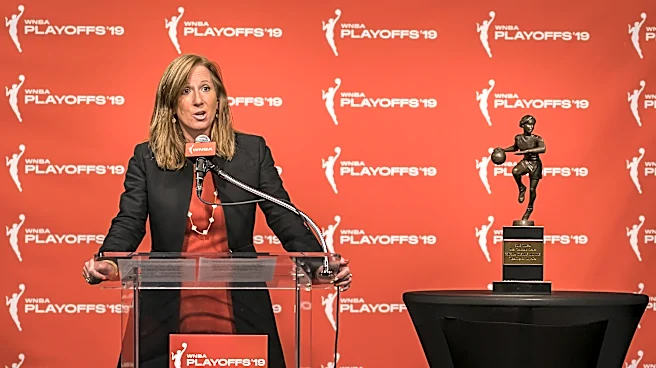
Outgoing WNBA Commissioner Cathy Engelbert presided over her final board of governors meeting, where discussions heavily focused on the league's capital structure, particularly the 16% stake sold to investors in 2022 for $75 million. This sale has been
a significant point of scrutiny due to concerns about undervaluing the league and complicating its ownership structure. Engelbert has been exploring ways for the WNBA to regain control of this stake as one of her final actions before retiring at the end of the year. The WNBA's equity is currently divided, with 42% owned by the NBA, 42% by WNBA team owners, and the remaining 16% by a group of investors including former players, current owners, and corporations like Nike. NBA Commissioner Adam Silver acknowledged the complexity of the issue, emphasizing the need to align incentives for all stakeholders rather than solely focusing on the ownership of the percentage.
Why It's Important?
The discussion around reclaiming the 16% equity stake is crucial for the WNBA's long-term financial autonomy and strategic direction. The 2022 capital raise, while bringing in funds, created a situation where a significant portion of the league's ownership is held by external investors, potentially leading to misaligned incentives among stakeholders. Regaining control could allow the WNBA greater flexibility in decision-making, revenue distribution, and future growth strategies, ensuring that the league's development primarily benefits its teams and players. This move could also signal a stronger valuation of the league, reflecting its recent surge in popularity and financial performance. The outcome of these discussions will significantly influence the WNBA's financial independence and its ability to capitalize on its growing market presence.
What's Next?
While the capital structure was extensively discussed, no votes were taken during Engelbert's final board meeting. The search for a new commissioner is underway, with over 12 candidates currently being screened. The new commissioner will likely inherit the task of navigating the complex issue of the league's capital structure and potentially pursuing avenues to regain the 16% stake. Future meetings will continue to address this and other critical topics, including potential changes to draft eligibility, training camp locations, and draft pick protections, with decisions on points of emphasis for the upcoming season expected in April. The involvement of NBA Commissioner Adam Silver and the input from WNBA team owners will be critical in shaping the league's financial future and governance.
Beyond the Headlines
The debate over the WNBA's capital structure highlights a broader challenge faced by growing sports leagues: balancing immediate financial needs with long-term control and valuation. The scrutiny of the 2022 capital raise underscores the importance of strategic financial planning and ensuring that investment deals reflect the true potential and value of an organization. This situation also brings to light the intricate relationship between the WNBA and the NBA, with the NBA holding a significant ownership stake and its commissioner playing a role in WNBA business decisions. The eventual resolution of this equity issue could set a precedent for how emerging sports leagues structure their ownership and manage external investments, aiming to foster growth while maintaining strategic control and maximizing stakeholder benefits.