
What's Happening?
François Chollet, creator of the deep learning open-source project Keras, recently posted on social media platform X, highlighting two prevailing views on the current state of Artificial Intelligence (AI)
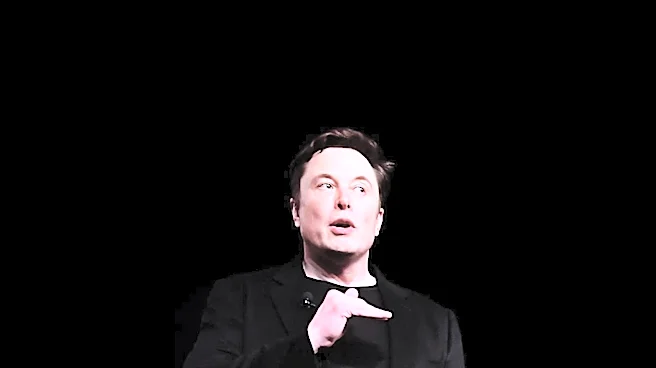
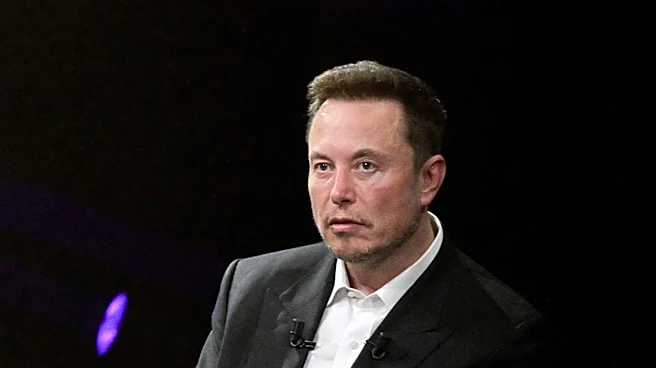
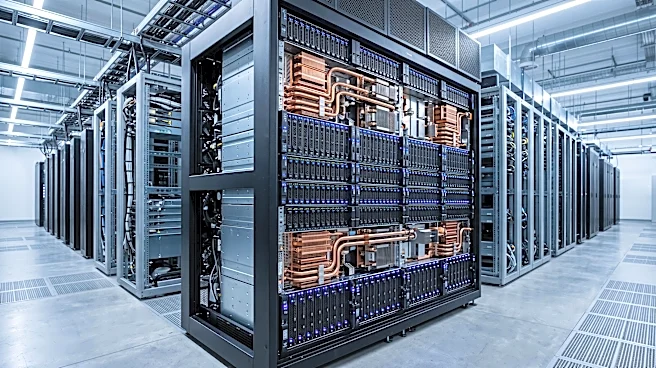
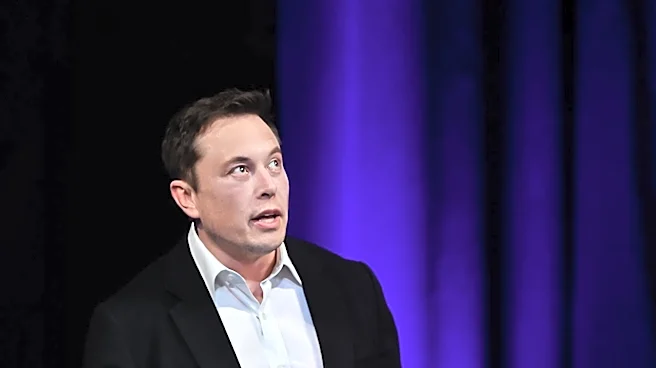
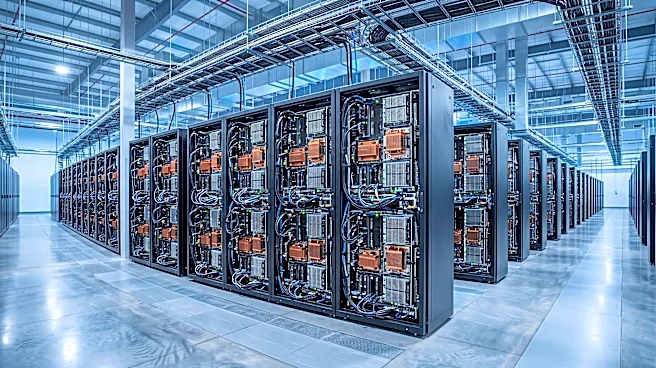
infrastructure. One perspective suggests that AI infrastructure development has peaked, and computing demand has reached its limit, implying the current market is a bubble. The other view, which Chollet supports, sees the present as a prime buying opportunity. He cited several data points to back his stance, including rising GPU spot prices, locked-in computing resources, and HBM and DRAM production capacity being largely booked until 2029, with storage chip supply expected to remain tight until the 2030s. Additionally, he noted that frontier model training computing power doubles approximately every five months, and AI inference services boast profit margins of 70% to 85%. In response, Tesla CEO Elon Musk commented on Chollet's post, emphasizing the extreme difficulty of providing power, cooling, and stable operation for such large-scale computing clusters. Musk warned that the AI industry could face severe capital shortages next year, potentially requiring hundreds of billions of dollars in additional operating funds if the cycle from computing cost investment to stable equipment revenue is delayed by several months.
Why It's Important?
The discussion between François Chollet and Elon Musk underscores critical challenges and opportunities within the rapidly expanding AI sector. Chollet's insights into the sustained demand for GPUs, HBM, and DRAM, coupled with the rapid increase in computing power for AI model training, indicate a robust and growing market for AI infrastructure. This suggests that companies involved in chip manufacturing, data center operations, and AI development are likely to see continued high demand and potentially significant profits. However, Musk's warning about potential capital shortages highlights a looming financial risk. The immense investment required for power, cooling, and stable operation of AI computing clusters could strain the financial resources of even well-funded companies. A capital crunch could slow down AI development, impact innovation, and potentially lead to consolidation within the industry as smaller players struggle to secure necessary funding. This dynamic could affect the U.S. technology sector, influencing investment strategies, supply chain stability for critical components, and the overall pace of AI adoption across various industries.
What's Next?
The immediate future for the AI industry will likely involve a continued scramble for critical hardware components like GPUs, HBM, and DRAM, as production capacity is already largely committed for several years. Companies will need to strategize on securing these resources to maintain their competitive edge in AI development and deployment. The potential capital shortage highlighted by Elon Musk suggests that AI companies, especially those heavily invested in infrastructure, may need to explore diverse funding avenues, including venture capital, strategic partnerships, or even government grants, to sustain their operations and growth. This could lead to increased scrutiny of AI project viability and a greater emphasis on profitability and efficient resource utilization. Furthermore, the challenges in providing adequate power and cooling for large AI clusters will necessitate advancements in energy efficiency and sustainable data center solutions. The industry may also see a push for more localized or modular AI infrastructure to mitigate some of these logistical and financial hurdles, potentially influencing regional economic development and infrastructure investment.
Beyond the Headlines
The debate between Chollet and Musk extends beyond immediate market dynamics, touching upon the fundamental sustainability and scalability of the AI revolution. The projected long-term tightness in storage chip supply until the 2030s, combined with the exponential growth in computing power demand, raises questions about the environmental impact of AI, particularly its energy consumption. The ethical implications of such resource-intensive development also come into play, as the benefits of advanced AI must be weighed against its ecological footprint. Moreover, the potential for capital shortages could create a barrier to entry for new innovators, concentrating AI development in the hands of a few well-resourced corporations. This could lead to concerns about monopolies, reduced diversity in AI applications, and a potential widening of the technological divide. The discussion also implicitly highlights the geopolitical significance of AI infrastructure, as control over critical hardware and computing capabilities could become a strategic asset for nations, influencing international relations and technological sovereignty.