





What's Happening?
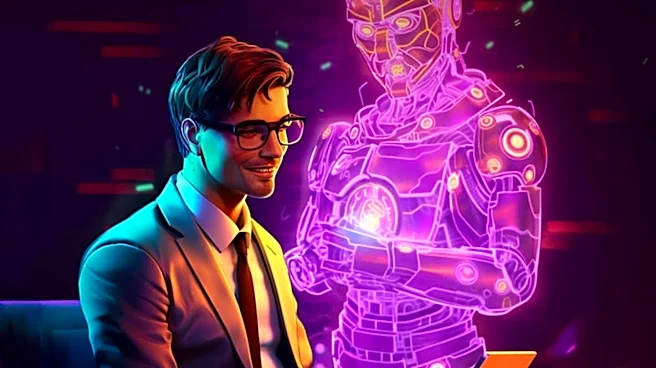
Henry Blodget, founder of Business Insider, has released a new novel titled 'The Upgrade,' which delves into the potential and risks of artificial intelligence (AI). The book follows the story of Victor Leetum, a tech billionaire who aims to clone himself
using AI to achieve immortality and global domination. The narrative is set against a backdrop of real-world concerns about AI, including its impact on the workforce and society. Blodget, who has a background in Wall Street and journalism, chose to write the novel himself, despite acknowledging that AI could potentially write great novels in the future. He did, however, use AI for feedback during the editing process.
Why It's Important?
The novel 'The Upgrade' is significant as it reflects current societal concerns about the rapid advancement of AI technology. Blodget's work highlights the dual nature of AI as both a potential threat and a source of optimism. The book addresses fears of job displacement and societal disruption, which are prevalent in discussions about AI's future. By exploring these themes through fiction, Blodget provides a narrative that resonates with ongoing debates about AI's role in shaping the future. The novel also underscores the importance of human creativity and decision-making in an era increasingly influenced by AI.
What's Next?
As AI continues to evolve, discussions about its ethical implications and societal impact are likely to intensify. Blodget's novel may contribute to these conversations by providing a fictional yet thought-provoking perspective on AI's potential consequences. Stakeholders in technology, policy, and ethics may use such narratives to explore regulatory frameworks and strategies to mitigate AI's risks while harnessing its benefits. The book's release could also inspire further literary and artistic explorations of AI, encouraging a broader public engagement with the topic.
Beyond the Headlines
Blodget's decision to write 'The Upgrade' himself, despite the availability of AI tools, highlights a broader cultural conversation about the value of human creativity in the digital age. The novel's exploration of AI's potential to create 'superbeings' and its impact on human identity raises questions about the future of human-AI interaction. As AI technology becomes more integrated into daily life, the ethical and philosophical implications of such advancements will likely become more pronounced, prompting deeper societal reflection.