
What's Happening?
Cyber Monday, scheduled for November 30, 2026, is anticipated to offer significant savings, particularly in the electronics and computer categories. According to Adobe's 2026 holiday forecast, discounts
are expected to peak at approximately 30 percent from Thanksgiving through Cyber Monday. While Black Friday, November 27, 2026, will feature major deals on toys, TVs, clothing, appliances, and furniture, Cyber Monday is projected to have the steepest price reductions for electronics (up to 30 percent off) and computers (up to 23 percent off). Retailers have increasingly started their sales earlier, with some deals appearing weeks before Thanksgiving and often extending beyond Cyber Monday. However, specific popular items may sell out or revert to higher prices before Cyber Monday, making early purchases advisable for desired products.
Why It's Important?
This forecast is crucial for U.S. consumers planning holiday purchases, as it provides strategic guidance on when to buy specific product categories for maximum savings. The trend of extended sales periods, starting well before Thanksgiving and continuing past Cyber Monday, indicates a shift in retail strategies, offering consumers more flexibility but also creating a need for careful timing. The emphasis on Cyber Monday for electronics and computers highlights its continued importance for tech-savvy shoppers and those looking for high-value items. For retailers, understanding these peak discount periods is vital for inventory management and promotional planning to capture consumer spending effectively during the competitive holiday shopping season. The data also suggests that while overall discounts may extend, the deepest price cuts are concentrated within the Thanksgiving to Cyber Monday window.
What's Next?
Following Cyber Monday, consumers can expect discounts to gradually decrease, with Adobe's forecast indicating a drop to 10 percent to 15 percent in December. Many retailers typically extend their sales into the week following Cyber Monday, but the most substantial price reductions are generally observed during the core holiday weekend. Shoppers who miss the Cyber Monday deals may still find some savings in early December, but these will likely be less significant. Retailers will then shift their focus to post-holiday sales and inventory clearance. Consumers should monitor specific product prices closely, as popular items may sell out quickly, and prices can fluctuate, sometimes even increasing closer to Cyber Monday for certain products.
Beyond the Headlines
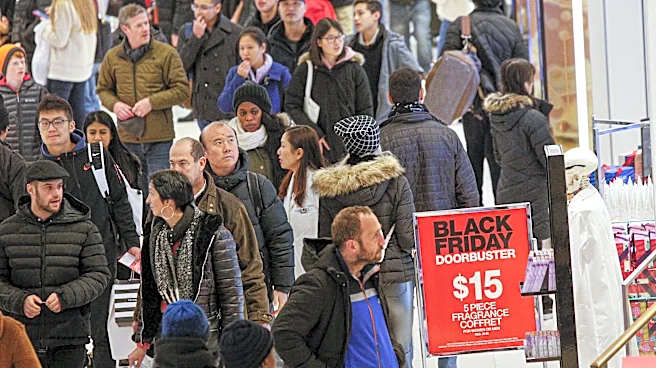
The evolving landscape of Black Friday and Cyber Monday sales reflects broader shifts in consumer behavior and retail strategies. The blurring lines between in-store and online sales, with nearly all retailers offering both, signifies the dominance of e-commerce. The extended sales periods challenge the traditional 'doorbuster' mentality, encouraging more deliberate purchasing decisions rather than frantic one-day rushes. This prolonged promotional window also intensifies competition among retailers, potentially leading to thinner profit margins but higher sales volumes. Furthermore, the data-driven insights from Adobe highlight the increasing sophistication in predicting consumer spending patterns and optimizing discount strategies, transforming the holiday shopping season into a more analytically driven event for both buyers and sellers.