






What's Happening?
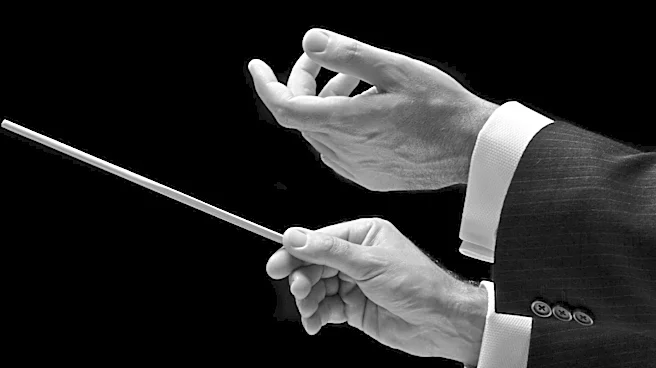
The role of the conductor in orchestral music is explored, highlighting the unique challenges and perceptions associated with this profession. Conductors are often seen as either mystical figures or unnecessary participants, with their role in guiding
an orchestra being both revered and questioned. The article delves into the historical evolution of conducting, noting its emergence in the 19th century as orchestras grew in size and complexity. The conductor's task is to unify the ensemble, interpret the score, and react to the musicians' performances, creating a dynamic and cohesive musical experience.
Why It's Important?
Understanding the conductor's role is crucial for appreciating the nuances of orchestral performances. Conductors influence the interpretation and emotional impact of music, affecting both musicians and audiences. Their leadership can enhance the performance, bringing out the best in the ensemble. This exploration of conducting sheds light on the collaborative nature of orchestral music and the delicate balance between authority and creativity. It also underscores the importance of trust and communication between conductors and musicians, which is essential for achieving a harmonious and expressive performance.