





What's Happening?
Two influential anime films from 1988, Katsuhiro Otomo’s 'Akira' and Isao Takahata’s 'Grave of the Fireflies,' are noted for their distinct explorations of postwar trauma, particularly in relation to the atomic bomb. 'Akira' opens with a silent white
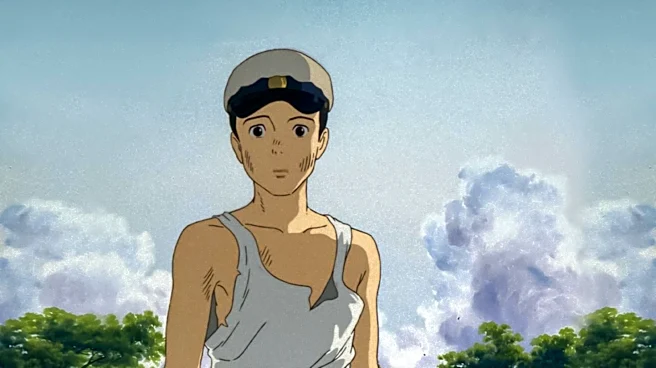
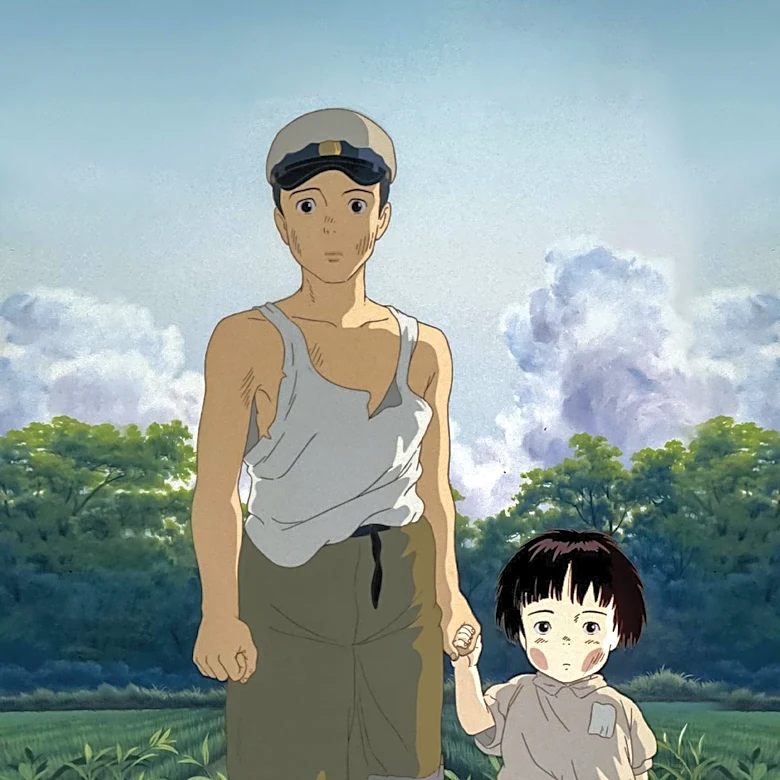
explosion engulfing Tokyo, directly referencing the atomic bomb and magnifying the violence into an apocalyptic science-fiction epic. It uses maximalism and grotesque imagery to force viewers to experience trauma through overwhelm and horror. In contrast, 'Grave of the Fireflies' offers a more explicit and somber exploration of wartime despair, telling the story of two children surviving the firebombing of Kobe. This film uses animation's ability to create a seamless world of possible and impossible, allowing viewers to engage with horrifying imagery without the distancing effect of live-action gore. Both films, despite their different approaches, conclude in profound silence, suggesting rebirth in the wake of destruction.
Why It's Important?
These films are important for their profound impact on how Japanese society, and the world, grapples with the legacy of World War II and the atomic bombings. They demonstrate the unique power of animation as a medium to explore complex and traumatic historical events, offering both literal and metaphorical interpretations of suffering and resilience. 'Akira' reflects the lingering anxieties of a post-nuclear world, while 'Grave of the Fireflies' provides a deeply personal and emotional account of civilian suffering. Their continued relevance highlights the ongoing need to understand the human cost of war and the long-term psychological and cultural effects of such devastation. These works contribute to a broader cultural dialogue about peace, memory, and the responsibility to prevent future atrocities, influencing subsequent generations of artists and audiences.
What's Next?
The enduring legacy of 'Akira' and 'Grave of the Fireflies' suggests their continued study and appreciation in film criticism, academic discourse, and popular culture. 'Grave of the Fireflies' is scheduled for a screening at IU Cinema, indicating ongoing efforts to present these films to new audiences. Future animated works may continue to draw inspiration from their innovative approaches to depicting trauma and the consequences of conflict. The themes explored in these films remain highly relevant in a world still grappling with geopolitical tensions and the threat of nuclear weapons, ensuring their place as significant cultural touchstones for understanding historical horrors and their contemporary echoes.
Beyond the Headlines
Beyond their immediate narratives, 'Akira' and 'Grave of the Fireflies' offer deeper insights into the nature of artistic expression and the processing of collective trauma. 'Akira's' use of overwhelming spectacle can be seen as a reflection of the incomprehensible scale of nuclear destruction, where the sheer magnitude of the event defies conventional representation. 'Grave of the Fireflies,' by contrast, uses its animation to create an intimate, yet universally resonant, portrayal of loss and innocence. Both films, by embracing the 'unreality' of animation, paradoxically allow for a more profound engagement with their difficult subject matter than live-action might. They highlight how art can serve as a vital mechanism for cultural catharsis, memory preservation, and a warning against the repetition of historical mistakes, shaping a collective consciousness around the devastating power of war and the atomic bomb.