




What's Happening?
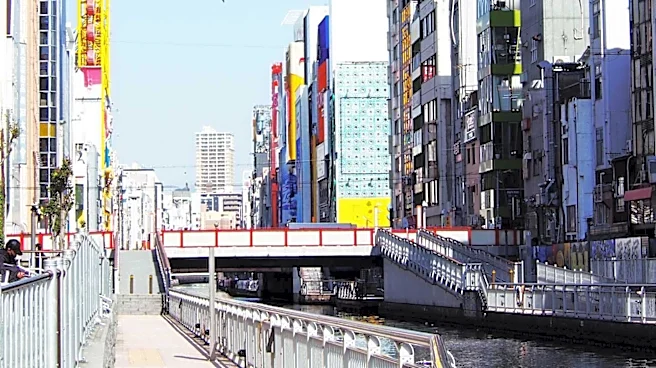
Osaka's Namba district is commemorating 130 years since the beginning of Japanese film exhibition. In 1896, an experimental screening using a Vitascope system took place at Fukuoka Iron Works, marking what is believed to be the first screen projection
film in Japan. The following year, on February 15, 1897, the first public film exhibition with an admission fee occurred at the Nanjo Theatre in Namba, utilizing a cinematograph projector brought by businessman Isaharu Inaba. This event, featuring footage like 'The Train Arriving at NY Battery Place Station,' established Namba as a pivotal location in the history of Japanese cinema. The Toho Nankai Building, which houses the current TOHO Cinemas Namba Main Building, stands on the site of the former Nanjo Theatre, continuing this legacy.
Why It's Important?
This historical milestone highlights Namba's enduring cultural significance as the cradle of Japanese film exhibition. The early adoption of film technology, facilitated by figures like Mr. Isaharu Inaba, demonstrates a forward-thinking entrepreneurial spirit that shaped Japan's entertainment landscape. The continuous presence of cinemas, including TOHO Cinemas Namba, in the area underscores the lasting impact of these initial events on urban development and cultural identity. For the U.S. context, this story illustrates the global spread and influence of early cinematic innovations, many of which originated in the U.S. (like Edison's Vitascope), and how they were adapted and integrated into diverse cultural settings, fostering new industries and cultural hubs worldwide.
What's Next?
To celebrate this 130-year history, the Namba Area has collaborated to install historical information signs and produce promotional videos, including one titled 'Cinema Town Namba.' These initiatives aim to educate the public about the district's rich cinematic past and its connection to current establishments like TOHO Cinemas Namba. Visitors to Namba are encouraged to explore these historical sites and learn about the evolution of film culture in Japan. The ongoing efforts to preserve and promote this history suggest a continued focus on Namba as a cultural destination, potentially attracting both domestic and international tourists interested in film history and Japanese culture.
Beyond the Headlines
The narrative of Namba as the 'City of Movies' extends beyond mere historical facts, intertwining with the broader themes of technological adoption, cultural exchange, and urban regeneration. The story of Mr. Araki Kazuyoshi bringing Edison's Vitascope to Osaka and Mr. Isaharu Inaba introducing the Lumière brothers' cinematograph reflects a period of intense global innovation and cross-cultural influence. This historical context reveals how new technologies, regardless of their origin, can profoundly reshape local economies and cultural practices. The continued regeneration of Namba as a 'city of movies' even after significant events like the 1912 Great Fire of Namba, demonstrates the resilience of cultural industries and their capacity to drive urban identity and economic activity over centuries.