





What's Happening?
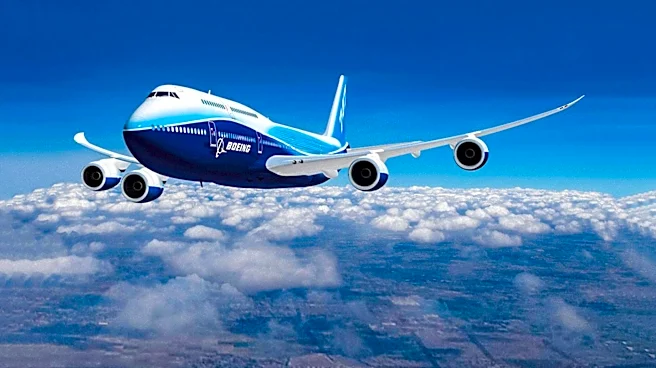
Retired Boeing 747 aircraft, once a staple of commercial air travel, are being repurposed into unique ventures worldwide. These 'Queen of the Skies' planes, which revolutionized air travel in the 1970s by making flights more accessible, are now finding
second lives as diverse as a hotel in Sweden and a man-made scuba diving site in Bahrain. The shift comes as newer, more fuel-efficient twin-engine aircraft, such as the Boeing 787 and Airbus A350, have rendered the four-engine 747 largely obsolete for airline use. While many 747s have been dismantled for parts or stored in 'desert graveyards,' a select few are being creatively transformed, allowing the public to experience these iconic planes in novel ways without needing a plane ticket. Only a handful of airlines, including Lufthansa and Korean Air, continue to operate the 747 on a limited number of routes globally.
Why It's Important?
The repurposing of Boeing 747s highlights a broader trend in aviation and sustainability, where large, retired assets are given new utility rather than being discarded. This not only preserves a piece of aviation history but also offers innovative solutions for tourism and environmental initiatives. For the tourism industry, these unique accommodations and attractions create novel experiences that draw visitors, potentially boosting local economies. Environmentally, repurposing reduces waste and the demand for new materials, aligning with circular economy principles. The decline of the 747 also underscores the rapid evolution of aircraft technology, emphasizing the continuous drive for greater efficiency and lower operating costs in the airline industry. This shift impacts manufacturers, airlines, and travelers, as the focus moves towards more sustainable and economically viable aircraft models.
What's Next?
As more Boeing 747s are phased out of active service, it is likely that further innovative repurposing projects will emerge globally. Aviation enthusiasts and entrepreneurs may continue to explore creative ways to utilize these large airframes, potentially leading to more hotels, restaurants, museums, or even educational facilities. The success of current projects, such as the Swedish hotel and Bahraini scuba site, could inspire similar initiatives in other regions. This trend could also influence how other large, retired industrial assets are viewed and managed, fostering a culture of reuse and transformation. The ongoing retirement of older aircraft models will continue to present opportunities for such creative endeavors, contributing to both economic development and environmental sustainability.
Beyond the Headlines
The transformation of retired Boeing 747s into hotels and underwater attractions speaks to a deeper cultural appreciation for iconic engineering marvels and a growing desire for unique, experiential tourism. These projects not only offer a second life to the aircraft but also allow the public to engage with aviation history in an intimate and unconventional manner. Ethically, it raises questions about sustainable disposal practices for large industrial equipment and the potential for creative reuse to mitigate environmental impact. The emotional connection many people have with the 747, often dubbed the 'Queen of the Skies,' means these repurposed planes serve as nostalgic landmarks, preserving the legacy of an aircraft that significantly shaped global travel and connectivity. This trend reflects a broader societal shift towards valuing heritage and sustainability in innovative ways.