







What's Happening?
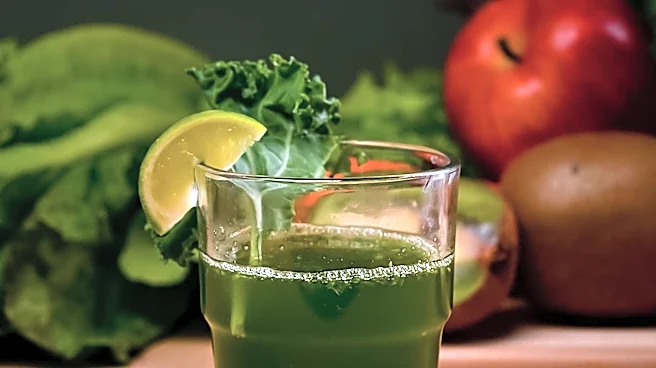
Green juice typically consists of a combination of leafy greens, a base vegetable like cucumber or celery, and fruits or citrus for flavor balance. Common leafy greens include kale and spinach, with kale offering a more pronounced and potentially bitter
taste compared to spinach's milder flavor. Cucumber provides a gentle, mild base, while celery introduces a distinctive savory note. Fruits such as apple and pineapple add sweetness and their own unique flavors, while lemon and lime contribute acidity. Optional ingredients like ginger can add warmth and pungency, and herbs like mint or parsley can introduce distinct aromas. The specific combination of these ingredients significantly influences the final taste profile of the green juice, meaning that a green color alone does not indicate a uniform flavor.
Why It's Important?
Understanding the components of green juice is important for consumers seeking to make informed dietary choices and for businesses in the health and wellness industry. For individuals, knowing how different ingredients affect flavor allows for personalized juice creation, catering to specific taste preferences and nutritional goals. This knowledge can help consumers avoid unpleasant experiences with certain flavor profiles, thereby encouraging consistent consumption of nutrient-rich beverages. For manufacturers and retailers, this detailed understanding of ingredient contributions is crucial for developing appealing and diverse product lines. It enables them to formulate juices that cater to various palates, from those preferring milder, fruit-forward options to those desiring more robust, vegetable-led blends, ultimately impacting market success and consumer satisfaction in the competitive health drink sector.
What's Next?
The trend towards personalized nutrition and health-conscious consumption suggests a continued demand for diverse green juice options. Consumers are likely to seek out products with transparent ingredient lists and clear flavor profiles, moving beyond generic 'green' labels. This will push manufacturers to innovate with new ingredient combinations and to clearly communicate the taste and nutritional benefits of their offerings. The emphasis on understanding individual ingredients will also likely lead to more educational content from brands and health advocates, empowering consumers to experiment with homemade recipes or select pre-made options that align with their preferences. The market may also see an increase in specialized green juices targeting specific health benefits, further segmenting the market and offering more tailored choices.
Beyond the Headlines
The detailed breakdown of green juice ingredients highlights a broader shift in consumer behavior towards greater awareness and control over dietary intake. This extends beyond just green juice to other food and beverage categories, where consumers are increasingly scrutinizing ingredient lists and seeking to understand the functional benefits of what they consume. This trend has implications for food labeling regulations, marketing strategies, and the overall transparency of the food industry. It also underscores a cultural emphasis on preventative health and wellness, where food is viewed not just as sustenance but as a tool for optimizing health. The ability to customize and understand the components of a simple drink like green juice reflects a larger societal movement towards informed consumption and a more proactive approach to personal well-being.