




What's Happening?
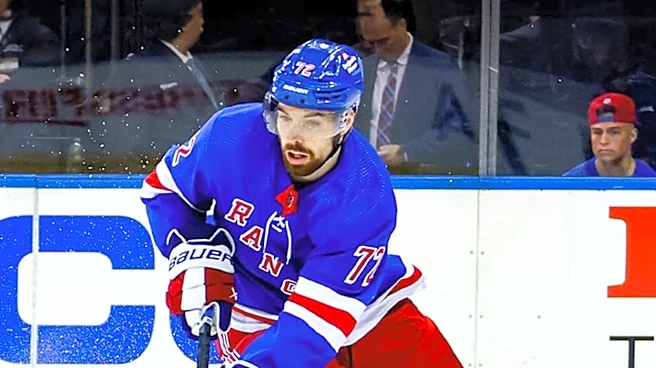
Jake Sanderson's eight-year, $8.05 million AAV contract with the Ottawa Senators, signed in September 2023, is being highlighted as a significant comparable for the Vancouver Canucks' extension of Zeev Buium. Both contracts represent a strategic, slightly
premature bet on young, American-born, left-shot defenders to become franchise cornerstones, aiming to secure them at a rate that is expected to become a bargain over time. Sanderson, drafted fifth overall in 2020, and Buium, drafted 12th overall in 2024, share similar profiles, including familial ties to the NHL and an elite level of skating. Sanderson's contract, which began in the 2024-25 season, has already shown significant value, with his cap hit decreasing as a percentage of the rising league salary cap and his on-ice performance improving dramatically. He has become a top-pairing defender for the Senators, increasing his point totals and ice time, and has garnered Norris Trophy votes and Olympic team selections.
Why It's Important?
This comparison is crucial for understanding the evolving landscape of NHL player contracts, particularly for promising young defensemen. The strategy of signing long-term extensions early in a player's career, often before their entry-level contract expires, allows teams to lock in talent at a potentially lower average annual value (AAV) compared to what they might command later. This approach mitigates future salary cap risks and provides cost certainty for the franchise. For players like Buium, Sanderson's trajectory offers an optimistic blueprint, demonstrating how early investment can lead to both individual success and significant team value. The rising NHL salary cap further amplifies the value of such contracts, as a fixed AAV becomes a smaller percentage of the total cap over time, freeing up financial flexibility for other roster moves. This trend impacts team building strategies across the league, influencing how general managers approach contract negotiations with their developing stars.
What's Next?
For Zeev Buium and the Vancouver Canucks, the focus will be on his continued development and performance, mirroring Sanderson's growth. The Canucks will be hoping Buium experiences a similar progression in his game, increasing his offensive output, ice time, and defensive metrics. The financial implications of the league's continued salary cap inflation will also be closely monitored, as it is expected to further enhance the value of Buium's long-term deal, much like it has for Sanderson. If Buium can fulfill his potential and become a top-tier defender, his contract, like Sanderson's, will be viewed as a significant bargain, providing the Canucks with a foundational piece at a favorable cap hit for years to come. This will allow the team to allocate resources to other areas of the roster, aiming for sustained competitiveness.
Beyond the Headlines
The trend of signing young players to long-term, 'team-friendly' deals early in their careers has broader implications for player empowerment and team loyalty in professional sports. While these contracts offer financial security to players, they also represent a calculated risk for both parties. For the team, it's a gamble on a player's future performance and health. For the player, it means potentially leaving money on the table if their performance far exceeds expectations. However, the rising salary cap environment in the NHL suggests that these early extensions are increasingly beneficial for teams, as the AAV becomes a smaller proportion of the cap over time. This strategy could lead to more stability within franchises, as key players are locked in for extended periods, fostering a stronger team identity and potentially reducing player movement. It also highlights the sophisticated analytical approaches teams are employing to project player value and manage their salary cap effectively, transforming how talent is valued and retained in the league.